Ferry Receipts for Warnings Never Sent
Page 75 of 248
Chapters
“I signed a bed estimate.”
For a moment, Beren’s hand stayed on the folder. “Then get me the uncut sheet, and we can talk about what it means.”
Hester glanced at the folder, but Beren had already turned a page. There was no loose sheet visible, no corner of yellow paper. Only white printouts with boxed labels and a set of lease statuses clipped to the back.
“I have the shelter book and delivery slips,” Hester said. “They show thirty beds, and ferry use after the terminal count.”
“That shows capacity,” Beren said. “Not that the marks were beds.”
“No. It shows the number can be reconciled with what the shelter was given.”
“A plausible reconciliation isn’t proof of the original heading.”
“I know.” Hester had expected the answer and still felt its weight. “But it’s a reason to stop using the marks as proof of refusal until we know.”
Beren slid a paper from the folder, checked a name, and marked a box. “I can’t freeze every determination on a possibility. Some of the approved families have already been assigned leases. They’re moving their belongings. If I reverse those placements, I create a new emergency for people who’ve already been told they can stay.”
“I didn’t ask you to reverse the leases.”
“You’re asking me to halt denials.”
“Yes.”
“The standard is not a family’s confidence that no one knocked. The list is all we have for some addresses.”
“Then we need something better than the list.”
Beren’s mouth tightened. “You have the crop. It shows your initials. You have an approximate bed count. You don’t have the original, and you don’t have proof of which family was where.”
Hester heard the distinction. She had been looking for a way to use numbers to undo the list, and the numbers could not do that by themselves. The shelter book held totals, not people. The delivery slip held beds, not nights. The ferry record would show passage, not who had been warned at a door.
“The marks are still mine,” she said.
“Then the original matters more, not less.”
Beren opened the folder again, ending the conversation. “When you get it, bring it to me. Until then, don’t promise people their denials will change.”
Hester left without promising anything. She could not make the records say more than they did, and she could not make the county admit less than it had.
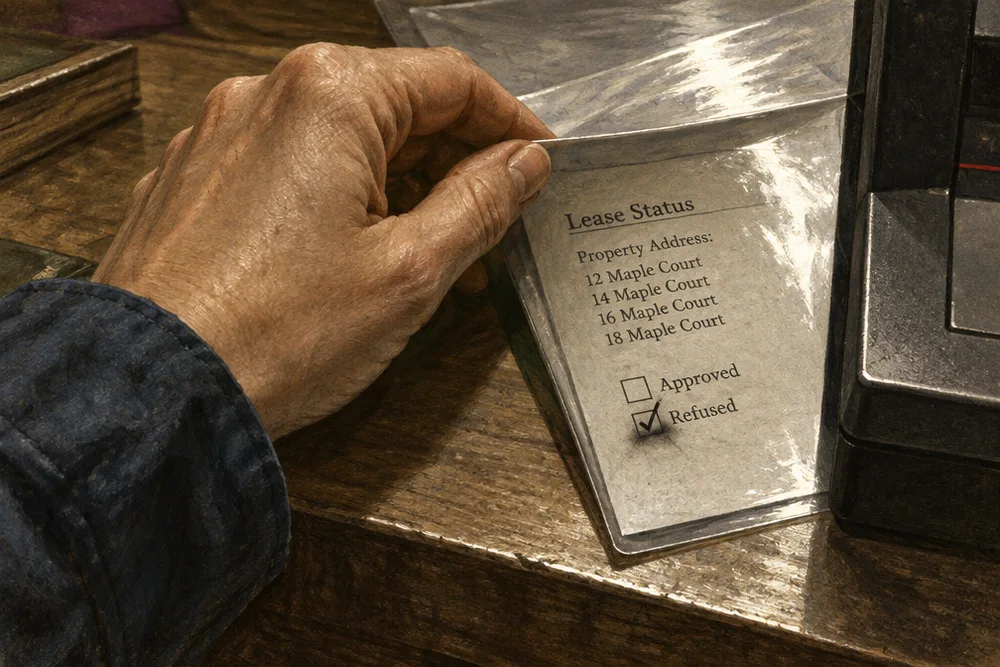
At the desk, the woman with the mud-stained sleeves had gone. Her denial notice remained on the counter for a moment, tucked beneath a plastic sleeve. Hester picked it up to place it in the return tray. The address had four units, but the notice listed one household and a single check beside “refused.”