Ferry Receipts for Warnings Never Sent
Page 56 of 248
Chapters
That was the distinction she had made to herself all morning: letter and record, decision and evidence. It sounded clean when spoken. The rest of the counter told her how little clean meant. A boy sat on a suitcase with his shoes in a grocery bag. A man kept unfolding a map of the ridge district, though every time he did, one corner tore farther. The terminal smelled of wet wool, paper dust and the brine that came in under the doors.
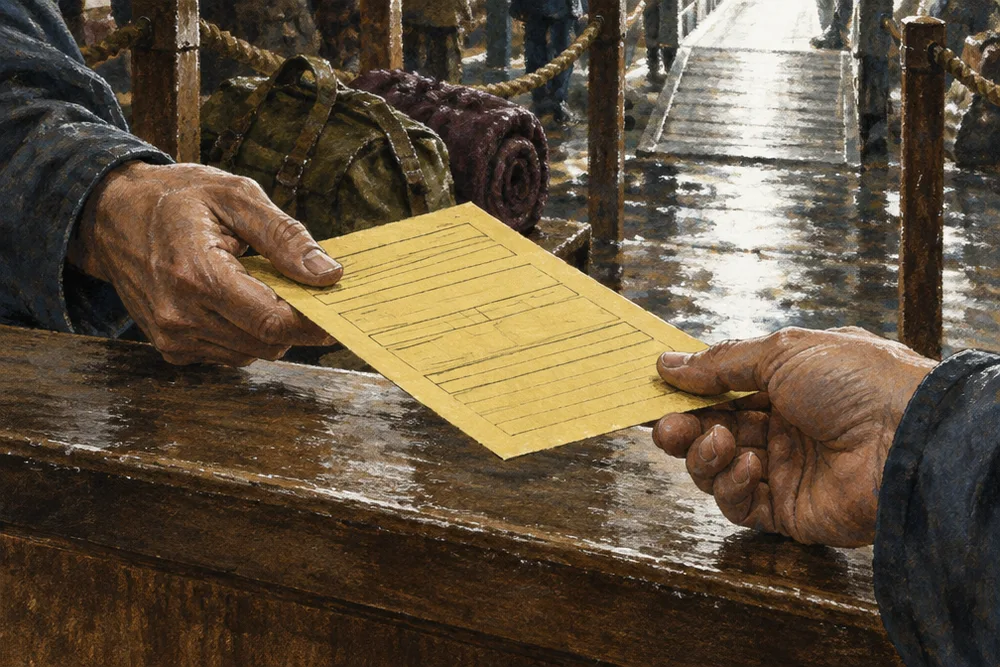
Hester gave Lio the yellow copy of the request. “Keep this. It shows you asked.”
“And if they say no?”
“Then you’ll have something to appeal with.” Hester heard how thin the promise was as soon as it left her mouth.
Lio tucked the copy into her coat. She did not thank Hester, but she stopped gripping the letter so tightly. The next applicant took her place. Hester asked for the name and address, and the day’s work began again, each story arriving in a county box already marked with its conclusion.
At the first lull, Hester pulled the denial log toward her. She was supposed to reconcile incoming appeals with the decisions already issued, a task that meant checking names, addresses and codes against a row of white printouts. The records were tidy in the way of things that had been flattened after the fact: one line per household, one refusal code, one time window repeated across page after page.
She opened the file for Lio Venn. The denial referred to an underlying visit record, but the digital attachment was labeled only “intake support.” Hester had seen the phrase before. It might mean a crew return. It might mean an intake form. She clicked the image and watched a pale rectangle load, then stop.
A row of dark ticks crossed the scan. Beside several of them were initials, compressed by the poor resolution. The heading had been cut off at the top edge. Hester enlarged the image until the marks blurred, then tried the next page. It showed the same narrow slice, same row structure, same missing top margin.
She leaned back. The terminal clock above the ramp read nine twenty. Two mornings remained in her contract, counting this one. The completion bonus sat in her mind as a sum, not a number: a deposit, a door that closed properly, a place where her mother’s sewing table might stand without being lifted onto blocks whenever the tide turned.