Ferry Receipts for Warnings Never Sent
Page 26 of 248
Chapters
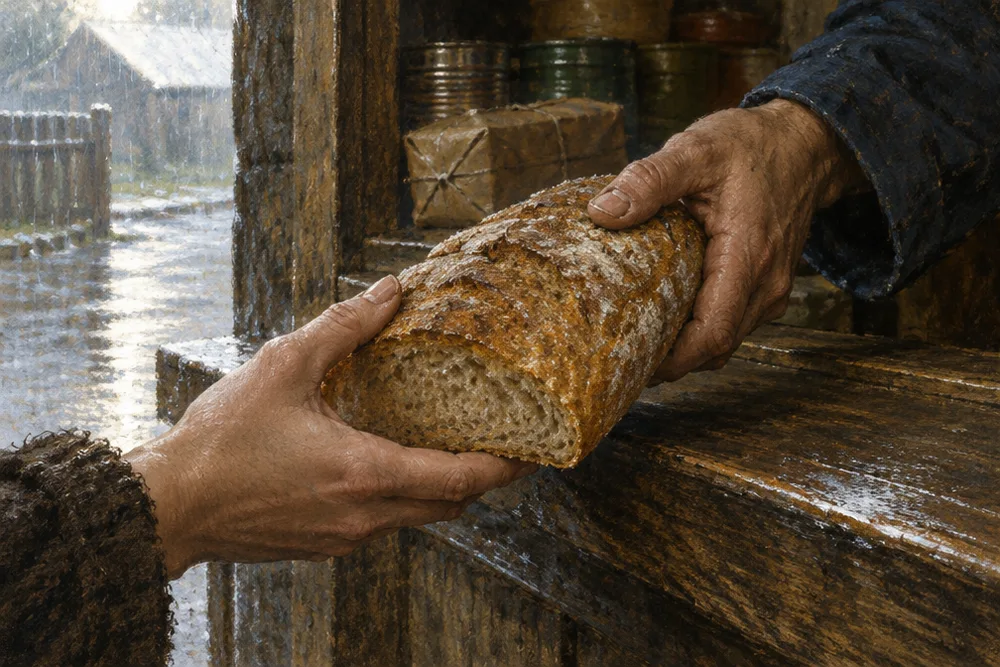
“Then tell her to come herself tomorrow.” The woman laughed, and Kit slid over a heel anyway. Hester registered the exchange and tried not to translate it into a count. Two portions did not prove one person or two. A familiar name did not prove a residence. She could feel her mind reaching for those shortcuts because they promised a clean shape to the mess.
The walk-in window began to clear. Outside, a ferry runner in a damp cap came back with a sack of empty tins. He laid them on the sill, and Kit sorted them into a crate. Hester used the pause to ask, “How did you decide what to send?”
“Dispatch called.” Kit tilted their head toward Latch Terminal. The dispatch room sat half a floor above the housing desk, its windows visible beyond the ramp. “Elías would tell me how many bundles to make. We sent what we had. If he said there were more people than we’d planned for, we stretched it.”
“Did he give you a passenger count?”
“Sometimes an estimate. Sometimes only ‘send more.’”
“And when he didn’t know?”
“Then I didn’t know either.” Kit wiped flour from their fingers. “We weren’t running a census. We were feeding whoever made it to the hatch.”
Hester glanced at the ledger. The entries varied: a number in the serving column, a dash in the dispatch column, a note that the second pot had gone over. Every page was a record of work, not a map of people.
“I can show you where the call times are,” Kit said. “But you have to promise you won’t put them beside a list of names.”
“I promise.”
Kit fitted a loose scalloped token between the pages to hold their place when somebody knocked on the sill. It was the runner with the sack of tins. He’d come back for the sack itself. Kit shook it out over the crate and a second token fell, struck the rim, and landed flat.
“Thought I’d lost that,” the runner said.
Kit handed it back with the sack. Hester watched him tuck the token into the fold at its mouth. On the pad the heading she’d crossed out was still legible if she tilted it away from the light.
“When a runner took more than one,” she asked, “did you mark down what was going to the same household?”
“No. I marked down what I gave the runner.”
“But if somebody came for two, one for themselves and one for somebody else, you’d have two portions on one collection.” She drew a short brace beneath the serving total and put two strokes inside it. “And three people in a room could have one collection between them. I wouldn’t need to know who any of them were.”