Ferry Receipts for Warnings Never Sent
Page 234 of 248
Chapters
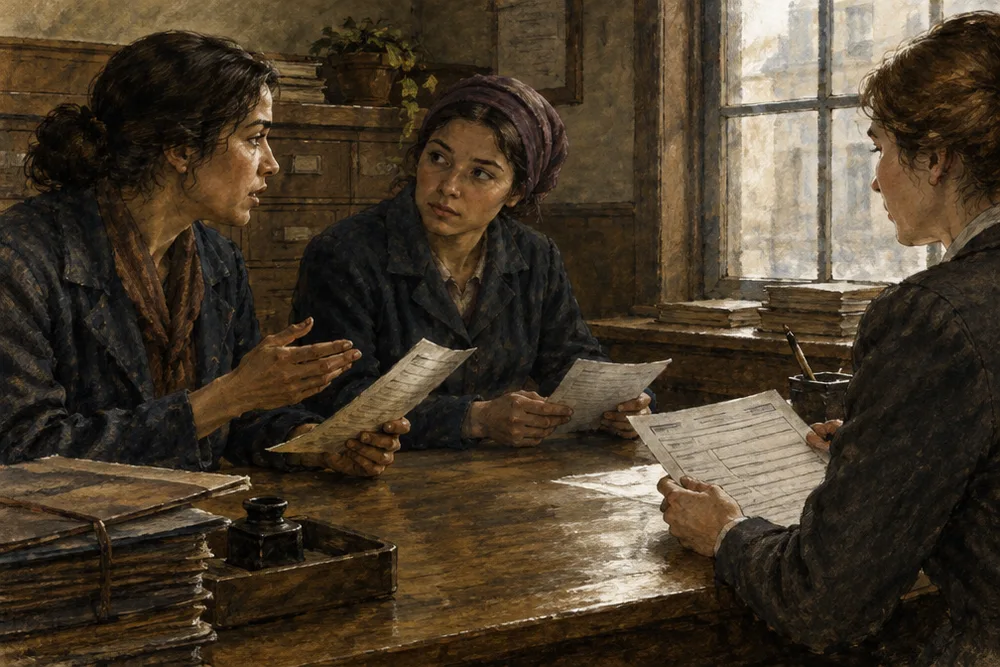
Elías read the procedure once, then went back to dispatch. Hester read it too, standing beside a passenger who was waiting to ask about the first morning crossing. She saw the question that should have been asked at the beginning, in plain language, not buried in a form: How many beds are needed here tonight?
The new procedure could not give anyone a bed by itself. But it did not make a guess into a refusal.
In the weeks that followed, people came back to the housing desk with separate claims. Some brought sworn accounts. Some had repair bills, messages from neighbors, or nothing more than a date and a name they were willing to put under it. The clerk took each one without promising that proof of a separate household would mean a lease. There were fewer units than families, and the appeal window did not change that arithmetic.
A woman from Lower Thread Court returned with her cousin. Their shared street number was still printed on both files. The cousin said they had cooked in separate kitchens; the woman corrected her, saying one kitchen had been in a back room they shared with two other renters. They went back and forth over details until the clerk asked what each of them wanted recorded. One wanted her own statement. The other wanted to wait and submit hers in private.
Beren let them decide. She no longer asked one person to speak for an address as if a number held a single voice.
Hester was not at the desk to see every form through. Her shift had ended, and her key was in the returned drawer. But she came through the terminal on the mornings she had to cross for work and recognized the new fields from a distance. Delivery. Response. Source. Each one asked for something that could be checked, or honestly marked unknown.