Ferry Receipts for Warnings Never Sent
Page 211 of 248
Chapters
The clerk asked if the witnesses had anything further to add. Siv shook her head. Beren said she had nothing further. Hester said no. The panel chair thanked them, then asked the parties to wait while the panel considered its order.
The room settled into the strained quiet that comes after a statement has been made and before anyone can know what it will change. Hester looked through the high window at the terminal floor. The desk was still taking names. She no longer had a shift to return to, and her own claim remained in the county’s system under a decision she had helped make possible.
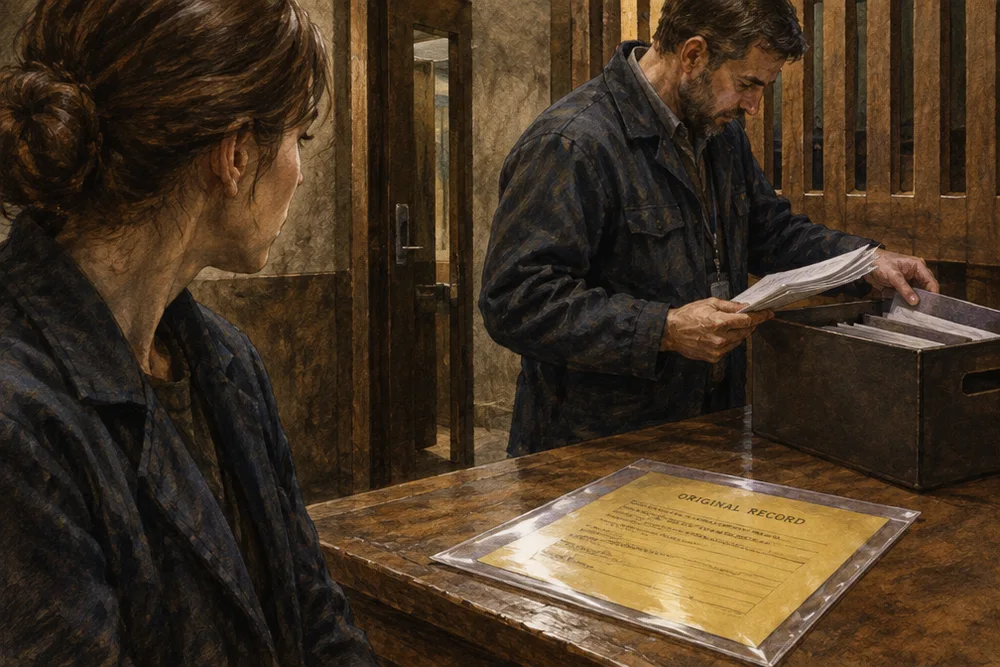
The panel withdrew through a narrow door behind the wall slots. The clerk gathered the white printouts but left the yellow original under its clear sleeve. Hester watched him check the page against his inventory before placing it in a document box. Its heading was no longer hidden; the plastic dulled the yellow but did not obscure the words.
The waiting interval stretched. A ferry horn sounded outside, then the scrape of a chair as the claimant in the work coat stood and sat again. Siv opened her lunch tin, saw that it was empty, and closed it without comment. Elías was not in the room; his ramp tally and the kitchen totals remained on the exhibit table, records of use that did not pretend to be a roster.
Beren stood by the window. She had removed the green folder from the table, but kept it in her hand. Hester wondered whether the routing packet was still inside, with Beren’s approval written beside the borrowed crosswalk. The county’s choices and Hester’s marks were separate acts, though they had met in the same column.
When the panel returned, the chair said no order would be announced until the clerk had reviewed the exhibits and each filed appeal. The chair would address the scope of the record and the panel’s authority at the next session. The hearing was adjourned for the day.
There was no ruling to carry outside. The people on the benches rose in different moments, some approaching the clerk, some leaving with their notices still folded. Hester remained seated until the room began to clear.
The open question followed her beyond the Gauge Room: how far could an order reach when the evidence showed a faulty classification, but not every household’s circumstances? The yellow sheet had turned over. What came next could not be read from its back.