A Small Fortune in Unclaimed Echoes
Page 173 of 186
Chapters
The tide shifted beyond the loading doors. A soft rush moved through the old building, rising from the drains and passing under the floorboards. Fenna listened. No voice came after it. No number, no thin return from a place the plans denied. Only the building settling around the people who had agreed to leave its account open.
The horns remained in the estate’s care while the cooperative prepared the annex for public use. They could not be moved until the conservator appointed by the probate registrar inspected their joints, finishes, and packing. Fenna was not that conservator, and she was relieved. The work needed someone with no part in the case and no memory of the first false catalogue.
She returned to the mezzanine bench to close her own file. The cylinder lay in its fitted case, wax amber under the bench lamp, its ridges protected by a sleeve and a foam cradle. Fenna checked the temperature and humidity notes, then compared the case seal with the receipt from the court. It was intact.
Her condition report described the test cut, the audible words, the faint return, and the controlled comparisons that had located the recording in the annex. It did not claim the voice alone had proved the sale. The receipt, ticket, corrected ledger, account records, and Ruth’s testimony had done their parts. The sound had told them where to look and what to test. That distinction mattered.
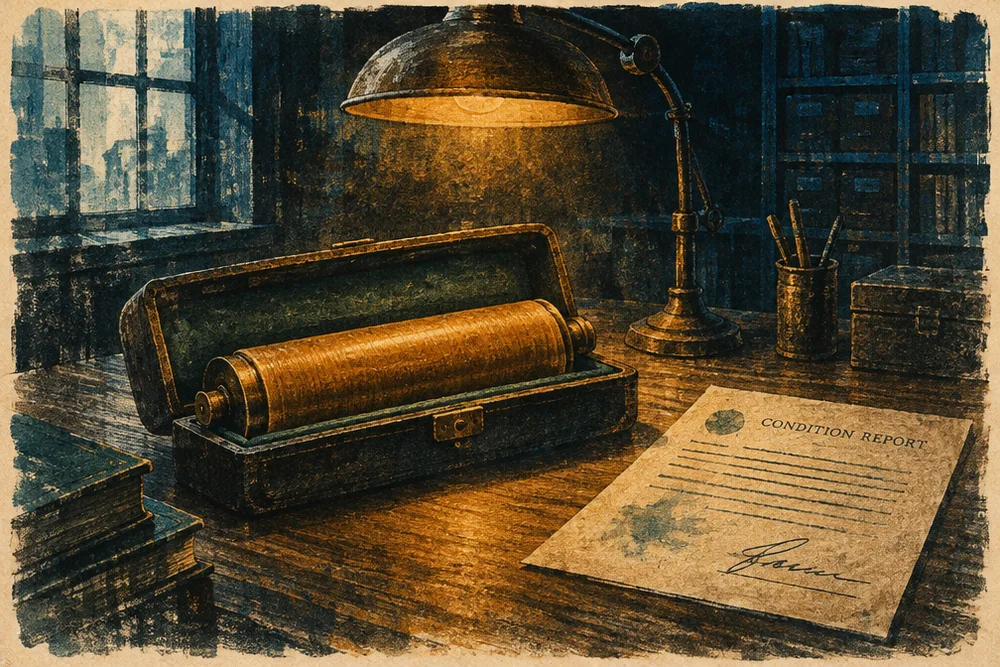
Fenna signed the transfer form, sealed the case, and wrote the storage instruction in block letters: stable temperature; limited playback; no direct stylus contact without conservator approval. The court archive would keep the cylinder with the evidence until the exhibits could be transferred to the cooperative under the public-access agreement.
She had started the job expecting to identify a voice. Instead, she had had to identify a room, a path through the air, and a debt that had outlived the people who wrote it down. None of those things had been solved by intuition alone. Each had required a measurement or a document, someone willing to risk a payment, and a place to set the evidence where no single owner could quietly alter it.
At the bottom of the file, she added a copy of the corrected ledger’s cover sheet. It showed both entries, the original date and the later correction, in ink of different colors. The duplicate sale was still there, visible as a mistake rather than disguised as a second truth.