A Small Fortune in Unclaimed Echoes
Page 158 of 186
Chapters
“Meaning a title that can be transferred without uncertainty.”
“And the uncertainty is not removed by asking four people to sign four incompatible accounts.”
The judge’s tone was dry, not theatrical. Fenna appreciated that. There was no villain’s confession in the room, no dramatic turn. Only a question that could be read from the words on the page.
Pellit said the agreements were conditional and could be revised. The lender’s notice, he argued, required a sale that would satisfy the probate estate and clear title before refinancing. If the auction was delayed, the house risked losing its financing. If it failed outright, the property might have to be sold under worse circumstances.
“The house’s financing is not the same thing as the estate’s title,” Judge Lorne said.
Iona’s jaw tightened. It was the smallest movement Fenna had seen from her all morning. The rigid neck, the controlled breath, the still hands: the director had built a whole posture out of not yielding ground. Yet the papers had made a kind of ground beneath her disappear.
Judge Lorne looked toward the bidders. “Mr. Marr, I understand you have asked to testify.”
Edwin stood carefully, his shoulders sloping beneath the slate cardigan. He swayed once, caught himself on the chair back, then crossed to the witness chair. When the clerk swore him in, he held his right hand up with an effort that looked more like embarrassment than reluctance.
“You are the deceased collector’s nephew?” the judge asked.
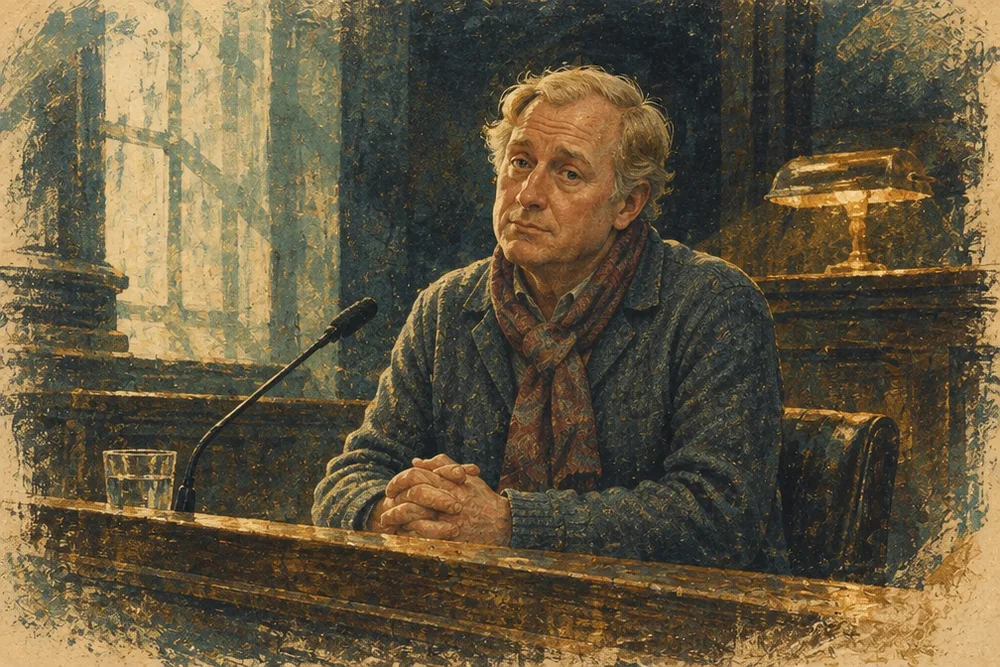
“Yes. I’m executor of the estate, pending probate.”
“You signed one of these purchase agreements?”
“I signed an advance agreement. It wasn’t quite a purchase agreement.” He glanced toward Iona. “I was told the auction needed the bidders secured while the estate was being sorted. My payment was called an advance against expenses.”
Pellit rose. “Mr. Marr, you knew there were questions about the horns?”
“I knew the inventory listed four horns as a complete set. I knew the auction catalogue separated them. I asked for old receipts because I thought that was what you did before selling estate property.”
“You also knew the estate had received a deposit related to the set?”
Edwin’s gaze dropped to the table. “I knew there was an amount in the records that might be an unpaid balance. I didn’t know what it meant until Fenna showed me the receipt and the ledger entries.”
“Did you sign the agreement intending to waive that deposit?” the judge asked.