A Small Fortune in Unclaimed Echoes
Page 146 of 186
Chapters
“It matches more than the paddle,” Fenna said.
She unfolded the stub carefully. The inner face bore a small stamped mark: R-14. She laid it beside the receipt’s photocopy, then turned the original receipt so the judge could see the faint embossed characters pressed through the paper. R-14.
“The rack number,” she said. “The annex ticket and the receipt were issued against the same rack. The receipt also carries the collector’s account mark, 614, in the clerk’s hand. The same mark appears on the stub. The paddle number was assigned to me forty years later. It is not evidence of the collector’s identity; it is what made me notice the recording’s spoken number.”
“You are interpreting a smudge,” counsel said.
“I’m reading a stamped code and an account number. The stamp is raised on the paper. You can examine it.” Fenna passed the receipt to the clerk, who brought it to the bench. “The receipt was folded twice. The number was on the inner face, protected from handling. It is not visible in the copy unless the fold is opened.”
The judge inspected both pieces, then asked the clerk to record the measurements and take them into evidence. Fenna sat back. She could feel the room recalibrating: not convinced, not yet, but no longer free to treat the three objects as strangers.
Across the aisle, Edwin Marr rocked once on his heels, stopped, and pressed his slate cardigan flat. His silk scarf had slipped toward one shoulder. He looked less like a beneficiary waiting for a ruling than a man watching the cost of his own signature come due.
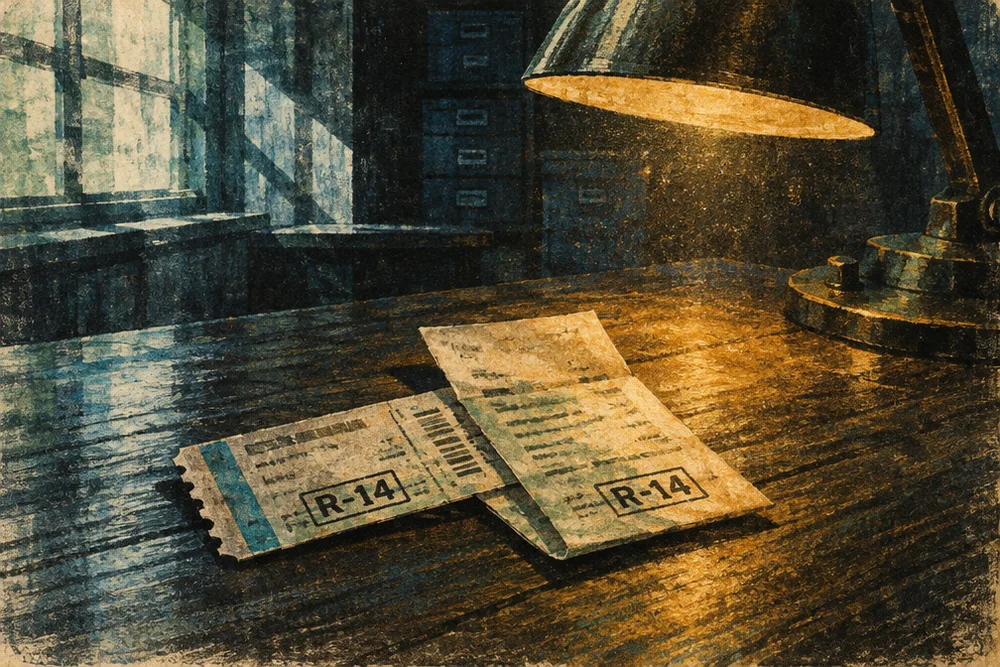
Iona’s eyes stayed on the documents.
Counsel asked whether Fenna had personally seen the receipt made. She said she had not. He asked whether she could identify the person who wrote 614 on the ticket. She could not. He asked if wax cylinders might be mislabeled, if sound might travel through ducts, if a recording could be copied or altered. She answered each question narrowly: yes, yes, yes; but the cylinder’s groove structure showed no splice at the relevant passage, and the paper evidence had its own physical marks.
“So the recording cannot authenticate the receipt.”
“Not by itself.”
“Nor can the receipt authenticate the recording.”
“Not by itself.”
The counsel smiled as though they had arrived at the end of a road. “Then you agree these are unrelated.”