A Small Fortune in Unclaimed Echoes
Page 139 of 186
Chapters
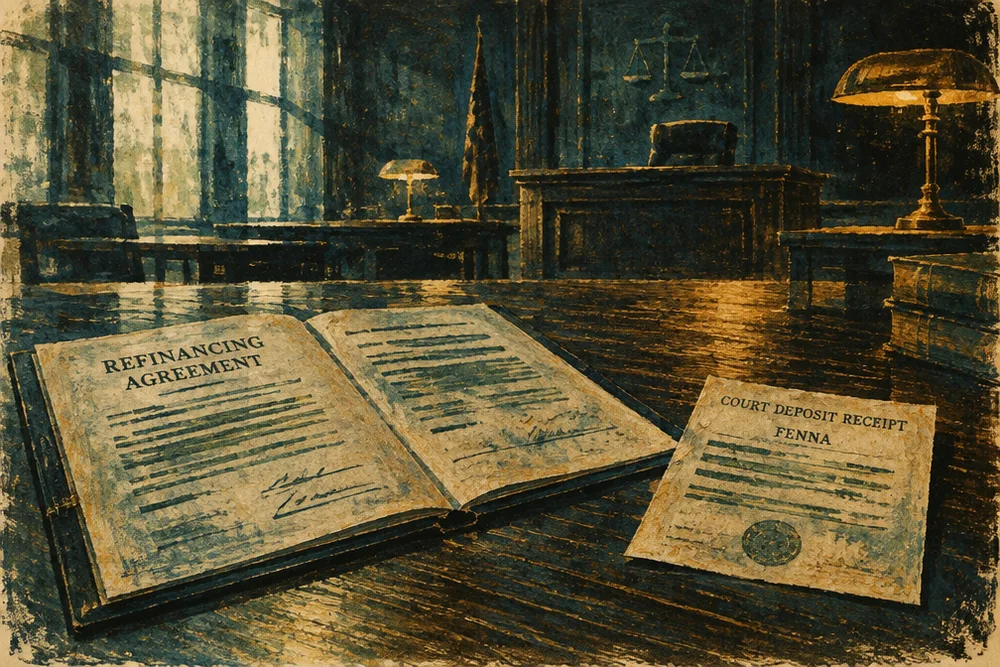
“We’ll need the fourth agreement,” Fenna said. “The one between the auction house and the party financing the refinancing.”
The examiner glanced at the order sheet. “It was delivered this morning.”
Iona Vetch’s contract had arrived in an envelope from her solicitor, with a letter reserving every objection to the bidders’ disclosures. The examiner had not yet opened it. Fenna saw the plum-colored envelope on the far end of the table. Its flap was still sealed, the auction house’s name printed in the corner.
Edwin followed her gaze. “That one is the reason she needs the sale.”
“The lender’s condition,” Saira said. “Clean title to the catalogue lots.”
Fenna nodded. The old liabilities were not hidden in a secret vault. They sat in the duplicated ledger, in the unremitted trust proceeds and the collector’s unclaimed deposit. The lender needed a clean history, and Iona needed the horns to pass through a new auction as if that history had no bearing on them.
The examiner opened Iona’s envelope with a letter knife. The agreement was not a bidder’s contract, but it belonged beside the others. It set out the terms of the refinancing and required the auction house to warrant that each lot had clear title and no unresolved prior sale. If the warranty failed, the lender could withdraw, demand repayment of its advance, and take control of the Cinder Exchange records as collateral.
“That explains the urgency,” Edwin said.
Fenna was watching the clause about the records. The archive, the ledgers, the catalogues, the correspondence—everything needed to establish how the horns had moved from the annex into the main sale register. Iona had not only paid four people to make separate bids look independent. She had made the auction itself a condition of the house’s survival.
“It also explains why she wanted the recording called contaminated,” Fenna said. “If it were dismissed as a modern splice or a damaged groove, she could certify the catalogue without accounting for what it says.”
The examiner turned a page. “The lender’s condition does not prove that she arranged the payments.”
“No. The four agreements do.” Fenna did not want the evidence to claim more than it could. “And the accounts show what the correction would expose.”
The examiner noted the distinction. She clipped a copy of the refinancing agreement to the exhibit list, then placed the original in a separate sleeve. The documents had begun to resemble a set of instruments in a case: distinct in timbre, linked by the pattern of their rests.