A Nursery Behind the Freight Shed Curtain
Page 95 of 262
Chapters
“It expires at the end of six weeks.” Emilio tapped the plan with his pencil. “The railway can take the tenancy if the municipality recommends us. I can offer you a year’s volume as sole contractor, at the original rate, once we have the building. Separate entrance for railway parcels. You would have reliable work and a proper arrangement.”
Jole followed the pencil point. A narrow door was marked beside the cart entrance, with a line leading directly to the railway side. “And the nursery?”
“There would not be one.”
“Rina’s copper?”
“The railway would install its own equipment.”
“The women?”
“You could hire whoever you require.”
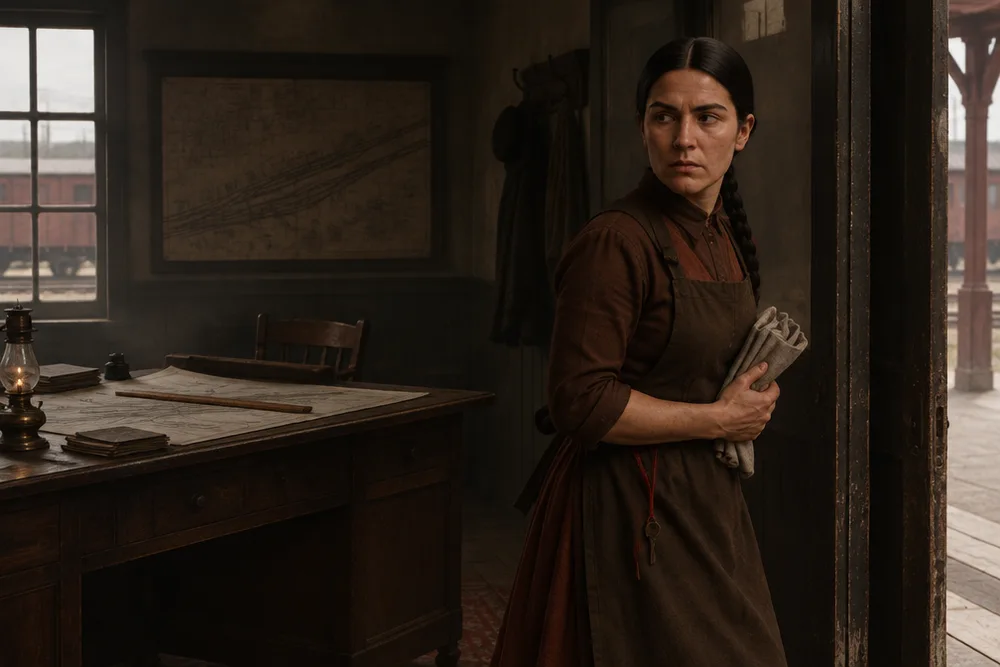
There it was: the contract Jole had wanted, laid out as plainly as a clean sheet. A year of volume. No waiting to hear whether the next household would bring a bundle. No counting coins against coal, or calculating how much she could risk on a copper she did not own. Her name as contractor, her orders, her key. She could imagine the shed without the curtain. She could imagine being the one who said when it opened and who came in.
“You would keep the work,” Emilio said. He might have taken her silence for indecision. “Your trial proved you can meet the deadline.”
“The trial proved we could meet it.”
“You were in charge.”
Jole looked at the plan’s single line for operator. The printed form beside it had one blank for a signature, one place for responsibility. It was a neat arrangement. It did not ask how the people whose hours made the work possible would keep their own place. It did not ask whether Rina’s care had kept Ada at the tubs or whether Teresina would stay through winter if she could not leave for hotel work.
“I need to speak with the property clerk,” she said.
Emilio pulled the plan back toward himself. “You may. But understand what you are putting at risk. The board will not hold the shed open because you want to renegotiate a trial.”
“I understand what the word guarantee means.” Jole folded her cost sheet once, along the line she had ruled for the total. “I want to know what the word priority means.”
“The railway’s need is substantial.”
“That isn’t what I asked.”
He set the brass ruler across the plan. “Then ask Lidia Boschi.”
Jole took the sheet and left the office. She walked out beneath the station clock without looking at its hands. She knew which day of the week it was. She knew how many days remained in the trial. She knew, too, that neither of those counts gave her a right to stay.