A Nursery Behind the Freight Shed Curtain
Chapter 1 · A Lock Before Soap
Page 1 of 262
Chapters
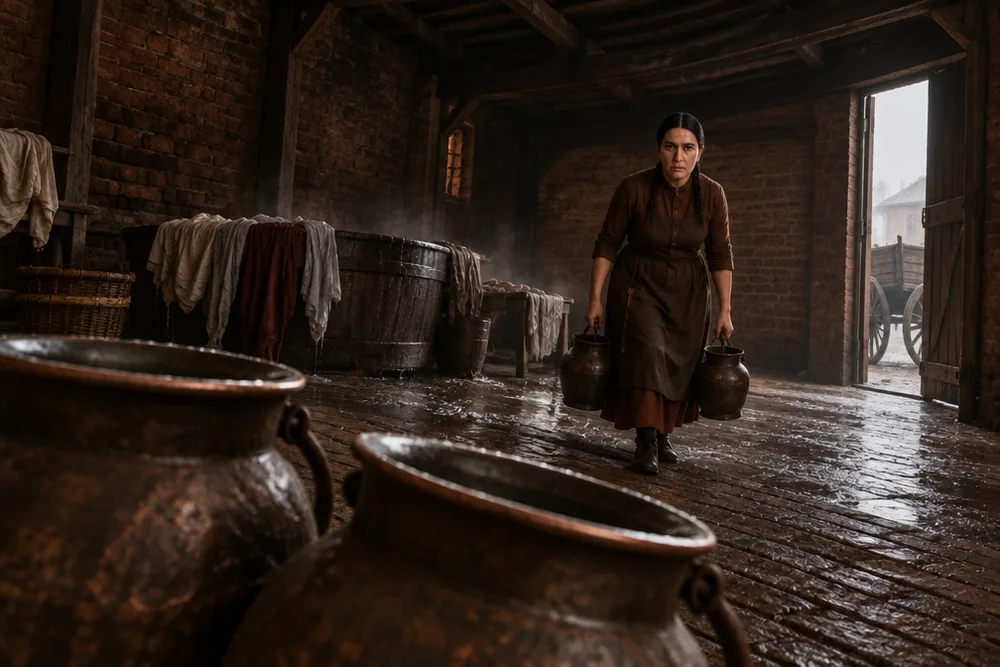
Jole Sormani wrote LOCK on the first line of the account book, before soap, before coal, before the rent she owed the town. The key lay beside her hand, new-cut iron on a red cord. She had paid for it with money meant for a sack of washing soda. That was the order of things: first, something no landlord or cousin could take back without asking her; then the means to make it useful.
The municipal clerk had given her six weeks in the Old Weigh Shed, beginning that morning. Six weeks to prove the empty freight room could earn rent. The rail door faced west, where weeds showed between the abandoned tracks. The cart door opened east onto a narrow yard. The brick floor sloped from one to the other, and the dark eaves held the smell of damp rope and old grain.
Jole measured the room with her steps. A bundle of sheets there, a tub here, a clear path from cart door to boiler—if she had a boiler. She counted each place as a possible customer and each customer as a portion of the rent. The shed was larger than she could afford and smaller than she needed. That, she thought, was a useful beginning.
She hung her apron on a nail and set out the equipment she had managed to borrow: two blackened pots, a washboard, a wooden tub, and a pail with a split in its handle. Her first customer arrived before she had finished arranging them. A boardinghouse cook named Signora Lotti carried a wet bundle against her hip, dripping across the sloping bricks.
“The sheets must be ready tomorrow,” the woman said. “They had a guest arrive unexpectedly.”
“Tomorrow costs extra,” Jole said, and immediately wished she had said it more firmly. Lotti looked at the pots, then at Jole’s hands.
“You have no copper?”
“Not yet.”
The load was already wet and souring. Jole accepted it. She could not begin a business by refusing the first bundle that came to the door.
She filled the pots at the Three-Spout Yard, carrying them uphill one in each hand. At dawn the households had first use of the low spout; she had gone later, but the queue had not vanished. A boy filled a jug while she waited. By the time she brought water to the shed her wrists trembled, and she had spent half the morning for a wash that ought to have been routine.