A Nursery Behind the Freight Shed Curtain
Page 257 of 262
Chapters
She gathered the week’s accounts by their corners. The ink was dry on Teresina’s but not quite on her own, where the pen had caught on a fibre beside the rent figure. She held that sheet apart until the shine went off the stroke. From the end of the table she could see a loaded basket waiting on the wash side. Without moving the table she could get the basket out and reach the nursery entrance, but she could not do both by the same path. She tucked the sheets beneath her arm and went to see where Ada would have to pass in the morning.
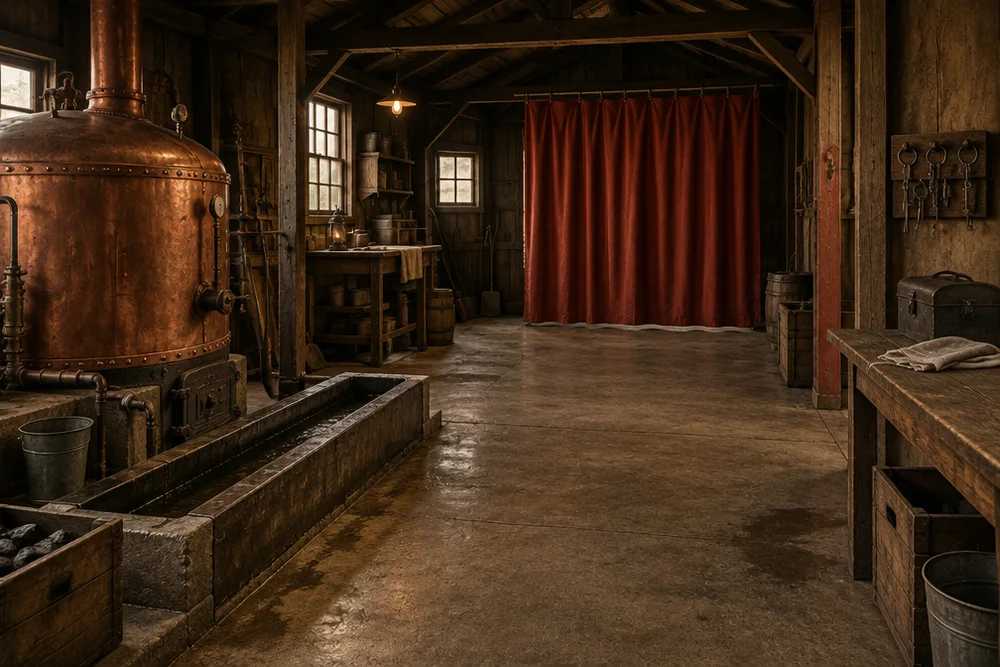
The shed had altered without becoming gentle. The copper’s flattened rim still faced the cart door, its brown flank dark against the brick. The repaired channel carried rinse water away from the dry loading step, and chalk marks kept the working route distinct from the children’s way. Above the step, the curtain hung from its rail, its pale triangular mend at child height. It divided the hot side from the nursery as it had when the arrangement began, but now the lease named both uses and named the women who could keep them there.
Jole walked the route with the copied accounts tucked under her arm. A basket could pass from the copper to the cart door without clipping the nursery bench. A parent could reach the curtain without crossing the wet brick. She had measured the space, tested it with loaded baskets, and paid for the channel repair. None of that gave her the right to call the dry step hers. She knew the sentence from the lease well enough to hear it in Lidia’s measured clerk’s voice: marked routes, no siding access, joint use.
At the cart door she paused by the hook. The key hung from it, dull iron against the soot-dark plank. Her own old key, the one she had bought before she had soap or a customer, rested on its red cord at her waist. She could use that one for the lock. The common key meant something else: the opening did not belong to the first person who had paid for it.
Ada came in carrying a small basket and her folded pay slips. Her narrow shoulders were squared against the morning chill, but she stood with her weight on one heel as usual. “I’m opening tomorrow,” she said, more to the shed than to Jole. She looked at the hook, then at the copied account sheets. “I’ll have to be here before the innkeeper’s boy.”