A Nursery Behind the Freight Shed Curtain
Page 238 of 262
Chapters
Jole hung the new lease copy beside the route plan. The paper did not cover the old mark where she had penciled her first measurements. She left both visible. There was the shed she had counted as paying bundles, and the shed they had now agreed to maintain together.
The women counted the remaining coins in the tin and set aside rent, fuel, and the next week’s wage money. There was not much to divide. No one asked for a distribution. Ada had a household to keep, Teresina had her own savings to protect, Rina had care hours to pay, and Jole had put her reserve into the deposit. Their accounts did not become one purse merely because the lease had four names.
“Tomorrow’s opening?” Ada asked.
Jole reached for the key, then stopped. The question had been ordinary once. She used to decide when the shed opened, who came in, and when the curtain was drawn. She had thought a key meant safety because it meant only she could admit or refuse. Now the common hook stood by the door, empty, beneath the schedule they had signed.
“Who is listed?” she asked.
Ada checked the rota. “Me. First collection, then I take the inn bundles.”
“Then it is yours to open.”
“Not mine alone,” Ada said. She gave Jole a level look. “I’ll use the key for the agreed hours. If a load is missing, I enter it. If Nella comes, I follow Rina’s rule.”
“Yes.” Jole took the key from its red cord and set it on the common hook. The metal swung once, tapped the wall, and settled.
From behind the curtain came the small scrape of a chair. Jole glanced toward the pale mend. Nella’s tin cup had been left on the dry step, its bent handle catching the last light from the cart door. Jole did not lift the curtain. Rina was in the nursery, and the child’s place there belonged to Rina’s care, under the hours they had agreed.
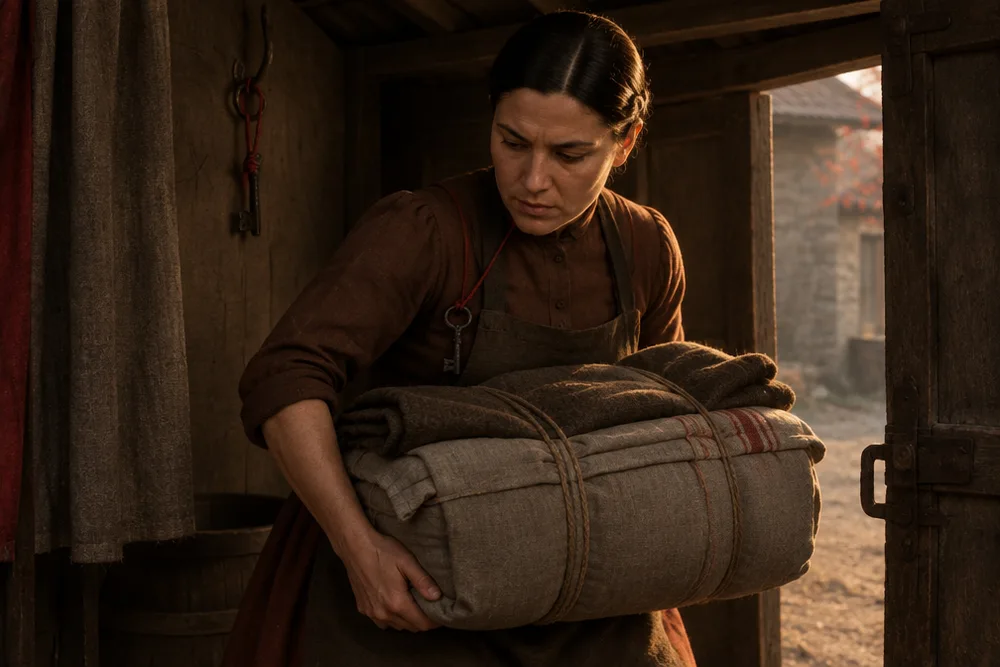
At the table, the register waited open. Jole closed it, leaving the copies where each signer could take one. Then she picked up a paid household bundle and carried it toward the cart door. The work was hers to do, the business theirs to answer for. Behind her, the key stayed on its hook; the curtain stayed drawn; tomorrow’s opening did not depend on her hand.
She stepped out into the yard to make the delivery before dark. The shed remained behind her, not secure because she alone could lock it, but secure for now because four women had put their names, money, and limits into the same book.