A Nursery Behind the Freight Shed Curtain
Page 215 of 262
Chapters
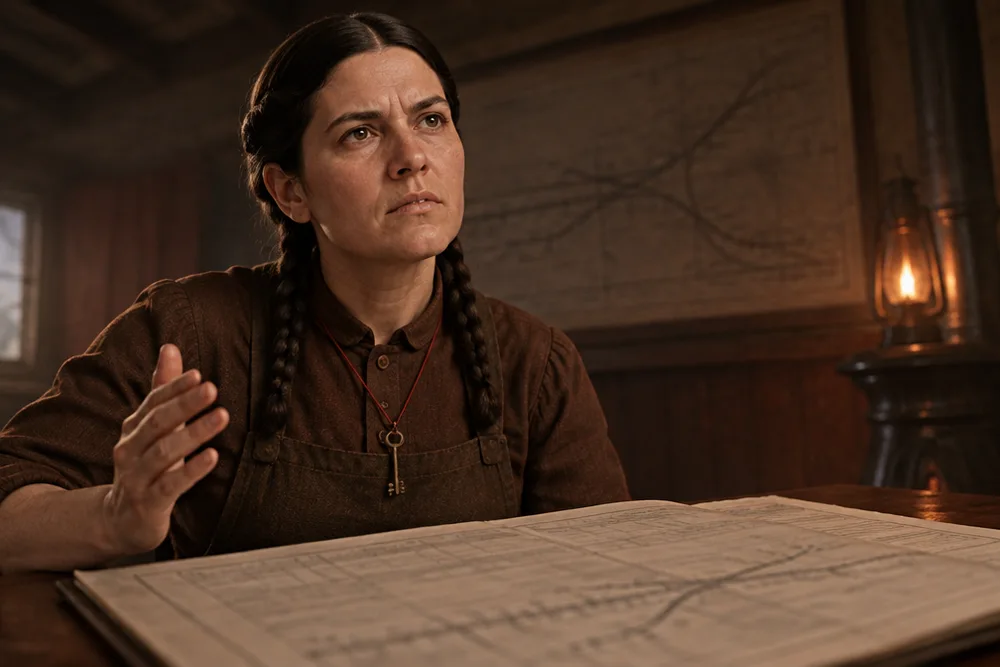
The silence that followed was not anger exactly. It was the room measuring what would be lost if each person got only what they had come to demand. Emilio needed predictable linen. The town needed rent paid without putting money into the shed. Jole wanted a business that would remain hers, but she had begun to understand that the word hers could be a door locked against the women who made the work possible.
Lidia turned to the board member. “The railway’s offer gives us one accountable contractor and a clear income. It also removes every other use and places the building under a broad access claim. The joint proposal must show it can pay and that its boundaries can be enforced.”
“Can the railway separate its use from the nursery?” another member asked.
“Not at the schedule required,” Emilio said. “A parcel can arrive late. A departure cannot.”
Jole looked toward Ada, who sat near the end of the table with her folded pay slips in one hand. Ada had not yet spoken. Her shoulders were narrow beneath her short brown bodice, and she stood with her weight on one heel even while seated, as if ready to leave if the room decided she had no standing there.
The clerk asked Jole whether she had anything further to say about the offer. The railway form lay open in front of her, the proprietor line blank beneath her name.
Jole had rehearsed sentences about the sums. None of them mentioned the curtain. “I know what the contract would let me earn,” she said. “I know what it would cost the others. I won’t tell you the two things are separate.”
Emilio turned the form a little so that the blank line lay square to Jole. “You needn’t sign while the clerk is considering the building. I can take the form back as it is.”
There was room in that answer to let the town decide for her. If Lidia found against the joint proposal, Jole could say she had tried. She could go down to the linen cage afterward and sign without any of the women there to watch her. She took the corner of the form between finger and thumb. Where she had folded it to carry home, the paper had gone soft as the edge of an old collar.
“Would it still be open to me if the town turned us down?”
“If the railway got the building and I hadn’t had to place the work elsewhere.”