A Light for One Window
Page 8 of 225
Chapters
The old broadcast was on a cassette Orla had lent the committee for reference, its label written in fading block letters. Tamsin set it in the better deck and checked the spindles through the clear window. She had found the copy in a box of vigil materials at school, tucked between programs and a typed list of names.
Kit watched from the doorway. “You’re checking the bell interval?”
“I want to know how long it is between the first bell and the second. It’s supposed to be eleven minutes.”
“Supposed to?”
“The timing matters. People turn their lights off at the first bell. They turn them back on after the second.” Tamsin adjusted the recorder’s input. “If I’m going to narrate it, I should hear what it sounds like.”
She pressed play. Tape hiss filled the booth, then a man’s voice introduced the vigil. The recording had a thin, distant quality, as if the speaker stood at the far end of a hall. A bell sounded, followed by a few words about sailors lost at sea. Then came a stretch of room noise and, at last, another bell.
Tamsin stopped the tape and marked the first bell’s time on her page. She rewound a little, listened to the second, and checked the difference against the cassette counter. It came close to eleven minutes. The old broadcast was not precise enough to settle every second, but the interval was unmistakable.
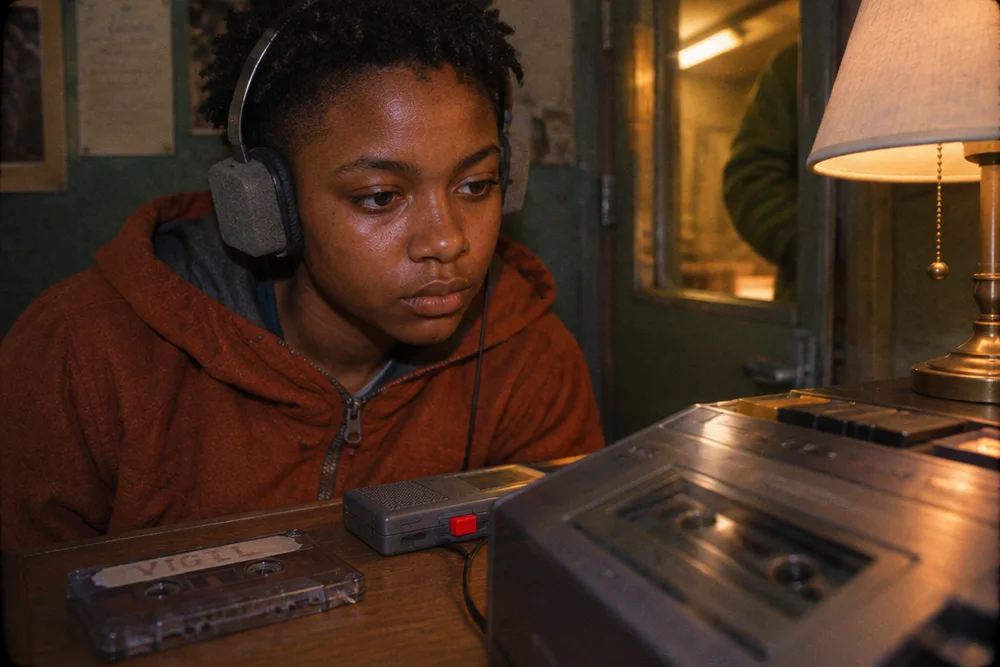
“So that part’s real,” Kit said.
“It’s on this recording.” Tamsin wrote that distinction down. “That’s what I can say.”
“You’re going to make a very thrilling history.”
She gave Kit a look over the headphones. “I’m going to make an accurate one.”
The broadcast voice returned after the second bell. It named the lost sailors and described the vigil as a tribute kept by the harbor community. Tamsin listened through to the end, then rewound to the first bell once more. Eleven minutes between a darkened basin and the relighting of the windows: an interval that could be heard as ritual even through the thin tape hiss.
She wrote down the wording that mattered, leaving gaps where the recording blurred. The paper filled with times, pauses and cautions. She was used to that part of the work. A voice said something; the tape held a version of it. Her job was to keep the difference visible.