A Light for One Window
Page 31 of 225
Chapters
“No, you know the sentence. Knowing it when the bursary’s on the table is different.” Bess’s voice was not sharp, but she had set the bundle down again. “You’ve counted what the course costs. Count what this choice costs too. Don’t let the numbers do the choosing for you.”
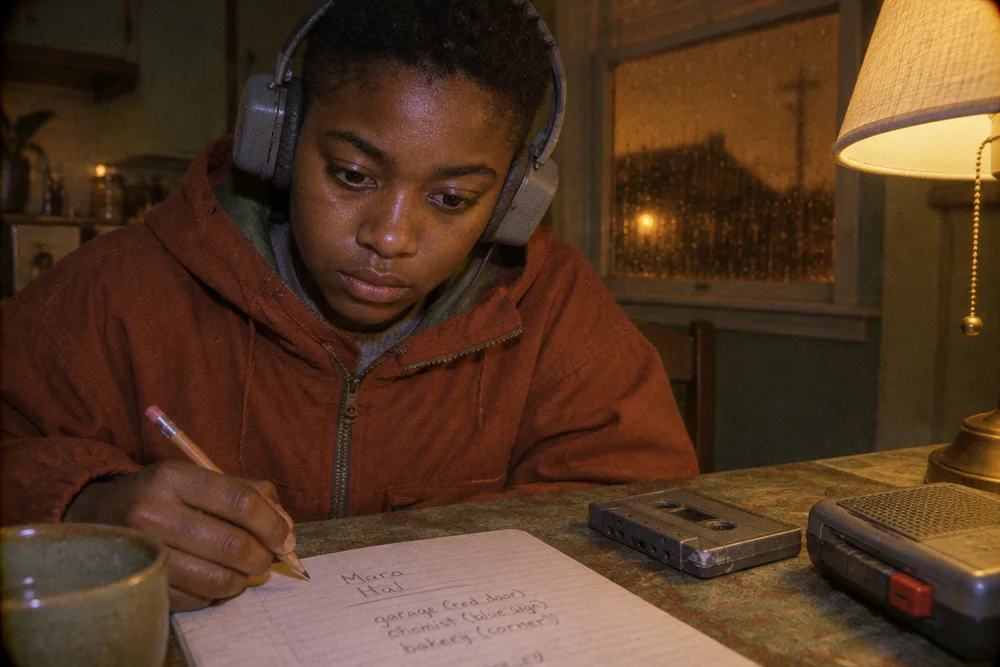
Tamsin glanced at the notebook. She had a page of numbers for the course—fees, bus fare, Saturday wages she would lose—and now a page of absences. Neither page could tell her what to do. “I’m not deciding the whole thing tonight,” she said.
“Good.” Bess picked up the trousers. “Eat before you start another side. A person can’t do decent listening on an empty stomach.”
After Bess left, Tamsin ate a slice of bread standing at the counter, then returned to the recorder. The tape had gone quiet while they spoke. She rewound a little and found Nell again by the sound of a cup being set down.
“Mara had hers in the stair window,” Nell said. “That was the one I saw when I came back from the sheds. She said she’d copied me because she didn’t like the thought of a cat walking into fog by itself. Hal said he’d put his on because he didn’t like any of us wandering about in the dark. That’s what he said, anyway.”
Tamsin caught the names carefully. Mara. Hal. She wrote them in the margin and added the shop landmarks. Nell had named two neighbors, not two witnesses to a first night. One copied the lamp because of the cat. The other gave a wider reason, and even that came through Nell’s memory of what Hal said. Tamsin marked the chain: Nell recalls Hal’s explanation. Not direct recording from Hal.
“Then other people did it,” Nell continued. “One window, then another. I wasn’t organizing anything. I had a cat and a lamp. People made their own minds up.”
The warmth of the story was in the modesty of that last sentence. It also made Tamsin wary. A history assembled from remembered modesty could still become a claim. The official account had a date and a solemn cause. Nell’s had a sequence and no date. Neither was a key to every door.
The tape ran on. Nell described the first winter lights as an untidy business. Someone in the fish shop forgot to pull the blind. A child held a candle too close to a paper shade. The harbor-facing windows did not all go dark together; there was no signal, no bell, no agreed interval. “It happened when folk thought of it,” Nell said. “Or when somebody reminded them.”