A Light for One Window
Page 198 of 225
Chapters
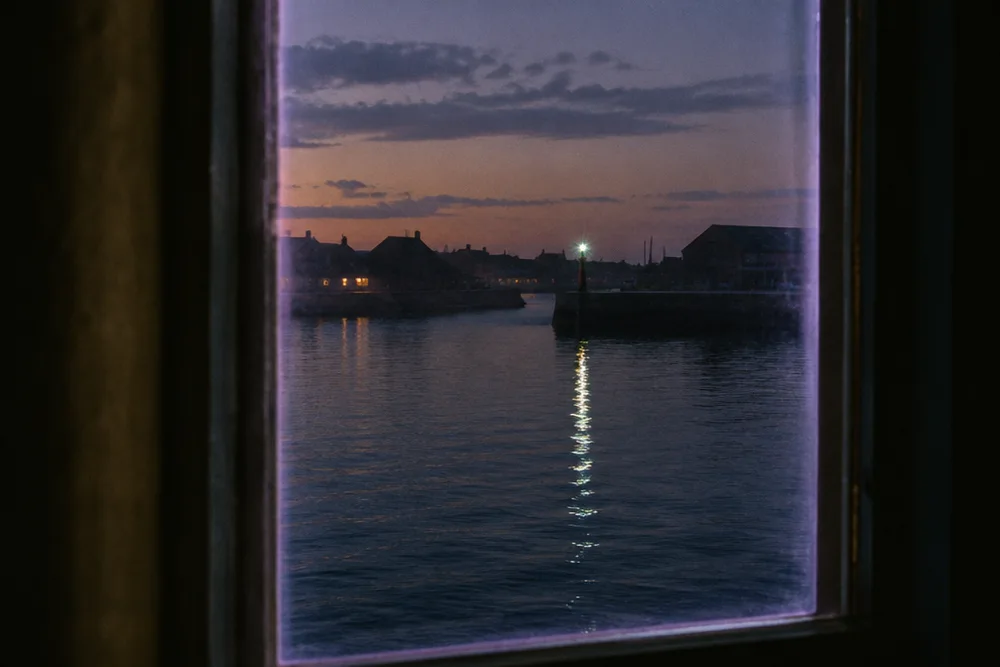
At the top, a narrow window looked down on the basin. A navigation light blinked beyond the roofs. Tamsin thought of the eleven minutes in which the harbor-facing panes went dark, and of standing below the loft while someone else pulled the lamp chain. She had watched the interval pass without timing it. The memory no longer sounded like a failure to record.
Mr. Ader, the archivist, met them at the door with his sleeves rolled and his reading glasses hanging from a cord. He had accepted a copy of the party’s session index but had not yet decided where to file it. “I can take the recording,” he said, “if we’re clear what it is and what it isn’t.”
“It isn’t a definitive account of the vigil,” Tamsin said. “It’s an independent recording from one night. The cassette excerpt Nell approved, the contributions with separate permission, and the disagreements that were left unresolved.”
“And the minute books?” Orla asked.
“Stay where they are, of course,” Mr. Ader said. “But if this goes in, it should sit alongside them. Not replace them, and not be presented as the answer to them.”
The phrase alongside them struck Tamsin as ordinary and exact. She had spent months trying to make separate pieces line up into one account. Now the archive was offering a shelf where the pieces could remain separate without being treated as useless.
Orla laid the committee’s request on the desk. “We’d like the local archive to accept Tamsin’s recording with the minute books. Neither designated the definitive account.”
Mr. Ader read the page twice. “I can do that. The access conditions will need to travel with it. No one should be able to pull a voice from this session without checking the permission record.”
“That’s already in the index,” Tamsin said. “And on the forms.”
“Good. I’ll need the final copy, not the working tape, and a written note explaining the limits.” He turned to her. “You’ll be able to provide that?”
“Yes.”
Mr. Ader cleared a space beside the minute books. Their bindings were cracked and dark, the spine labels written in several hands. One volume lay open to a list of names. Tamsin recognized the careful columns from the copies she had consulted, but the original paper had a worn hollow where many fingers had turned the page.
“I don’t want the recording described as the community’s voice,” she said. “It wasn’t everyone. Some people didn’t come. Some came and didn’t want to speak. One family took their contribution back.”