A Light for One Window
Page 170 of 225
Chapters
“Please,” Tamsin said. “And the uncertainty about the photograph’s date stays in the index.”
“It stays.”
Wystan put the cassette back in his pocket. “I want a copy of the index.”
“You can have one. I’ll make it without the family’s identifying details.”
“And Nell?”
“She can have the full index if she wants it.”
“She’ll want the bits about what people said the tape meant,” he said. “Not the people’s names.”
Tamsin made a note to ask Nell first. She was beginning to understand that consent did not pass through a person like a parcel; it had to be checked at each door. The archive had a public copy now, but not the whole night. It had a record of its own edges.
Outside, Wystan paused beneath the archive’s narrow window. “I used to think if we could get the right story written down, people would stop making up worse ones.”
“Did it work?”
“No.” He gave a quick, humorless smile. “But at least this one’s in my words.”
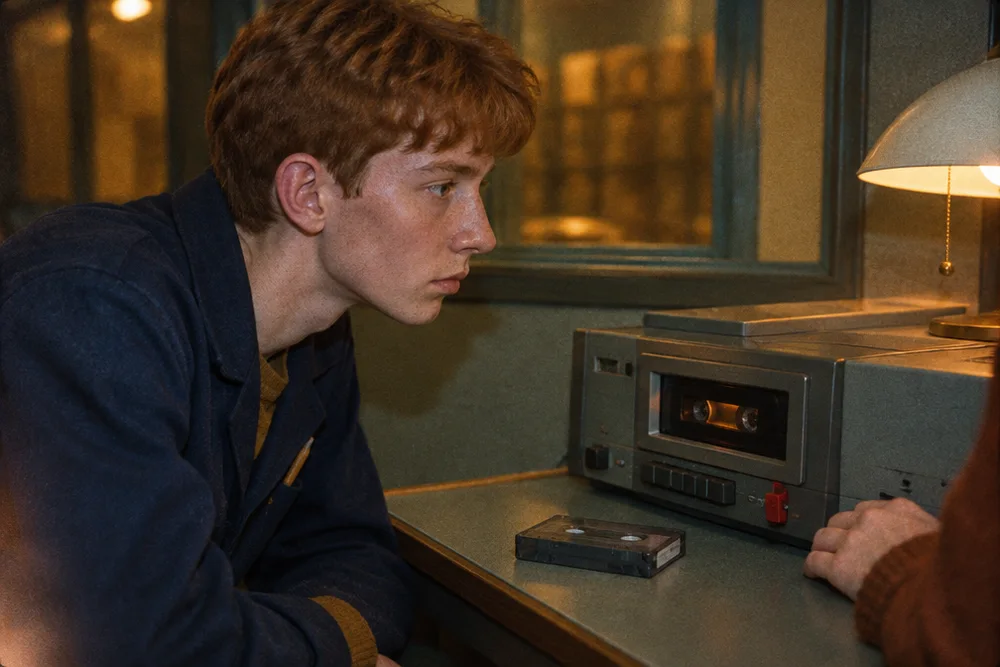
Tamsin folded the empty paper sleeve from the cassette in her pocket. “That matters.”
“It does,” he said. “Just don’t make it mean more than that.”
That evening Tamsin spread the session index on the worktable at Fold and Hem. Bess was closing the till, her marine-blue smock dusted with thread, the yellow tape measure resting against her collar. She did not ask whether the party had gone well. She asked what had come home with Tamsin.
“A public copy and a list of limits,” Tamsin said.
Bess counted the cash drawer and slid the ledger beneath the till. “That sounds like work.”
“It is.”
“Do you want me to read the list?”
Tamsin hesitated, then passed it over. Bess read the entries slowly, her feet planted wide at the worktable. She paused at the family’s returned contribution and at Wystan’s excluded attempt. “You’ve written down what you gave back,” she said. “That’s good.”
“It feels strange to keep a note about something we don’t have.”
“If someone asks later, you’ll know why it isn’t there.” Bess tapped the page. “That’s not the same as keeping the thing.”
Tamsin looked at the red latch on her recorder case. During the party she had thought of it as a switch between silence and sound. Now it seemed more like a small, blunt tool: it could stop the machine, but it could not make a person’s words safe by itself. She had to ask, write, check, return. She had to leave room for someone to change their mind.