A Light for One Window
Page 163 of 225
Chapters
A scrape came from behind the pillar. Wystan was sitting on a chair he had dragged away from the group, his long legs folded awkwardly under him. He had waited while the family decided. Now he rose, brushing dust from one ochre cuff. “I’ve got mine,” he said. “If you still want it.”
Tamsin looked at him. “You said you wanted to hear it back first.”
“I did.” Wystan came to the table and bent at the hips to look down at her notes. “I heard it. I’m not taking it back. I want it in the local archive, with my name on it.”
“And public playback?”
“At the archive, if they ask. Not in the school teaser, not at the shop counter, not chopped into a line that sounds like I’m making fun of her.” He tapped the table beside the recorder, not the machine itself. “You know what I mean.”
Tamsin did. His testimony described being a boy at the vigil, watching people crowd at the loft window and block the way Nell walked home. It also described the year he started waiting near the landing, pretending he was there to help with the key. The recording was quiet and exact until he reached the part about a tourist asking whether Nell was the cat lady. Then his voice had sharpened.
“There’s the first attempt,” Tamsin said. “The one before you stopped and started again.”
Wystan’s jaw tightened. “Leave that out.”
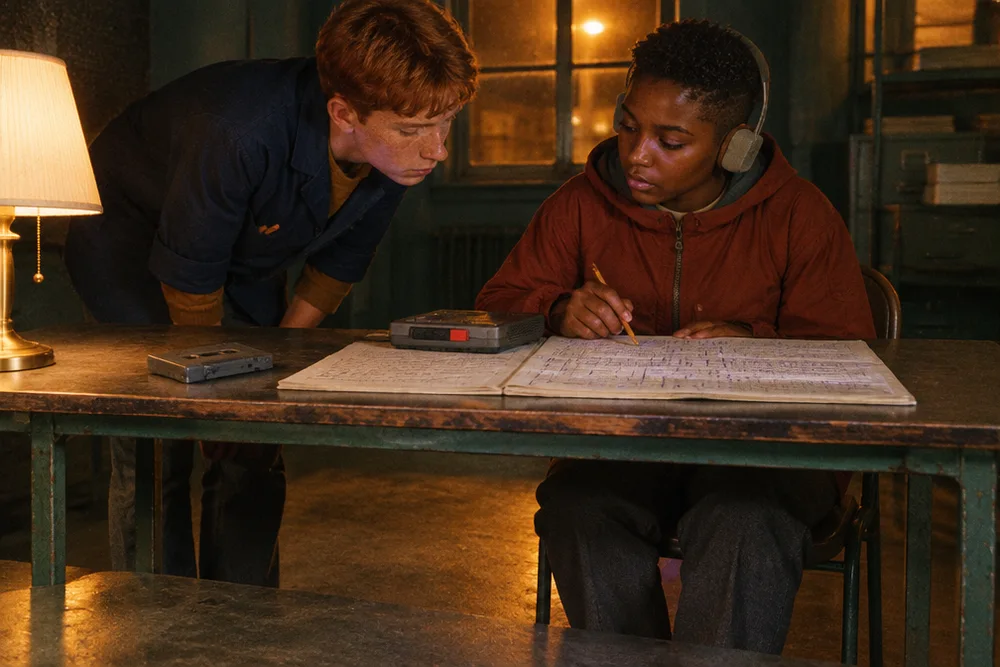
“It’s on the same cassette.”
“I know.” He straightened. His stubborn forelock fell toward his eyebrow. “I was angry. I still am, sometimes. But that first bit isn’t what I want people keeping. I don’t want it played back at me like I was the reasonable one and everyone else was an idiot.”
Tamsin glanced at the recorder. The machine could not tell a first attempt from a second one. It stored the stop, the restart, the breath, the part that had been harder to say. She could hear where the tape changed because she had sat with it while it ran. She could not make the machine’s edges into Wystan’s permission.
“Then I’ll mark the start and end you approve,” she said. “And I’ll keep the excluded section out of the archive copy.”
“Out of the copy,” Wystan said. “Not just out of whatever you play.”
“Yes.”
“And not in the transcript as an angry version.”
She considered the page. A transcript could preserve the gap without preserving his words. “I can mark that he stopped and restarted, and that he asked for the first attempt to be excluded. No summary of what you said.”