A Light for One Window
Page 159 of 225
Chapters
Tamsin stayed beside the table, looking at the pages she had filled. The recorder was still closed. The cassette belonged to Nell and Wystan; its voice had been heard only in the passage they had chosen. The account of the night had begun, but it had not been completed. Tamsin could see the edges of it now: where people had spoken, where they had stopped, where the story would have to remain blank.
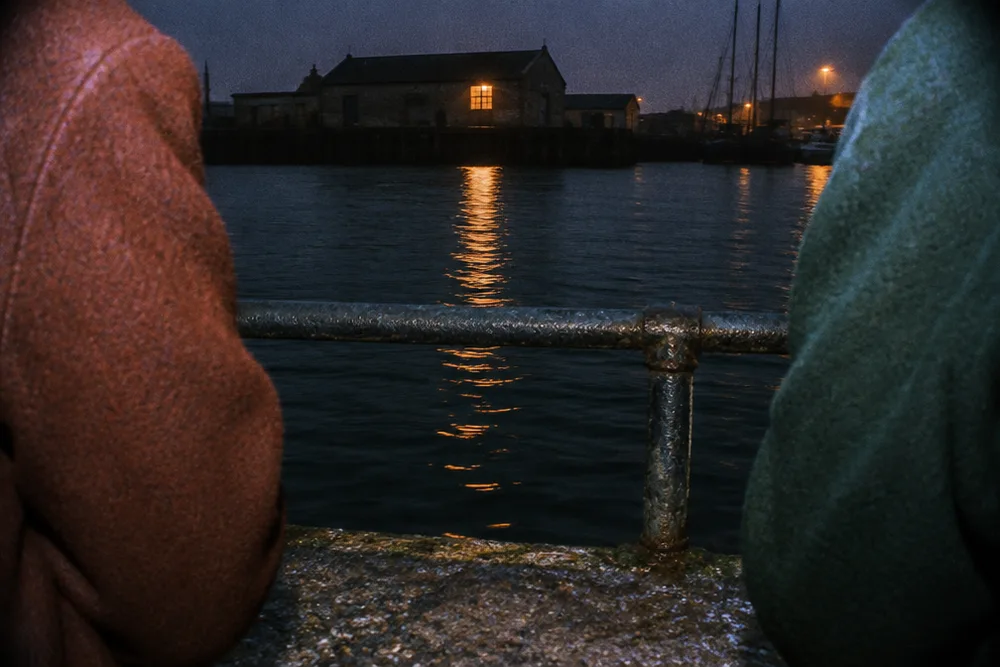
Outside, the night air smelled of tide mud and coal smoke. Tamsin followed the others down the Net Exchange steps, carrying her notebook beneath her anorak so the mist would not spot the paper. Across the basin a kitchen was still lit, and so were the two rooms above the netmaker’s shop. The lamps at the working berths were pale and steady.
A few people stopped along the quay. The Stitch Room stood above them, its loft window dark. Tamsin saw Orla speaking with Nell and Wystan, but she did not go over. She had no reason to insert herself into their conversation. Instead she stood near the woman with the mitten, who had tucked the mitten into her coat pocket.
“I always think the dark will feel shorter,” the woman said.
“Does it?” Tamsin asked.
“No.” The woman kept her eyes on the loft. “But I know when it will end.”
Tamsin thought of Orla’s brother in the register and the sister who had feared water. She thought of Nell’s lamp moved away from the cloth bench when neighbors began looking for it, though that belonged to another evening, another story. She thought of Wystan watching people block the path so he could see his grandmother walk home. None of those thoughts fit neatly into the eleven-minute interval. They could still fit inside it.
Behind them a lamp was still on in the Net Exchange, in the window that looked up toward Fold and Hem. Tamsin looked at it, then at the dark loft across the basin. She could picture the cream shade there on vigil night, the pane turning warm amber, someone along the quay taking off a hat or speaking a name too softly for her to hear.
On the walk home she let the scene run on in her head. She pictured herself leaving her watch alone, the recorder still in its case. Around her, people waited in their own ways: hands folded, shoulders hunched, a child asleep against a coat. The woman with the mitten pressed her pocket flat. Tamsin carried the thought all the way to the second bell.