A Light for One Window
Page 105 of 225
Chapters
Bess finished the seam, lifted the sleeve and checked the hem with a thumbnail. “Then ask what one night costs. Not what you hope it costs.”
At the Net Exchange, the caretaker kept the rental book in a drawer under a jar of loose screws. He was a narrow man with a pencil tucked behind one ear, and he spoke as though every room had already been promised to somebody else.
“For a meeting?” he asked when Tamsin said she wanted the hall.
“A listening party. People will hear a short recording, then talk about what they remember of the November vigil.”
“How many?”
“I don’t know yet.”
“That’s not a number.”
“Twenty, maybe. More if shift crews can come.”
He showed her the book. A mending group used the hall on Tuesdays, and the harbor union had booked a Saturday afternoon. Evenings were easier, but the hall had to be cleared by ten. Tamsin ran her finger down the ruled columns, stopping where an empty Thursday sat between a darts supper and a children’s dance practice.
“What about Wednesday?”
“The late shift gets off then,” she said, remembering the workers who crossed the basin road at dusk, boots marked with rope tar. If she chose a night when only committee members could attend, the party would prove nothing about who used the vigil. “Thursday. How much for one evening?”
The caretaker named the fee. Tamsin repeated it to be sure. It was more than she had hoped and less than the deposit she had just surrendered. She could pay it from her Saturday wages if she did not spend the money on anything else.
“Do you need the room for a vote?” he asked.
“No. I need people to be able to hear each other.”
He gave her a look that might have meant he knew the difference, or might have meant he had no interest in it. “There’s a dead spot behind the pillar. You’ll want to test the chairs.”
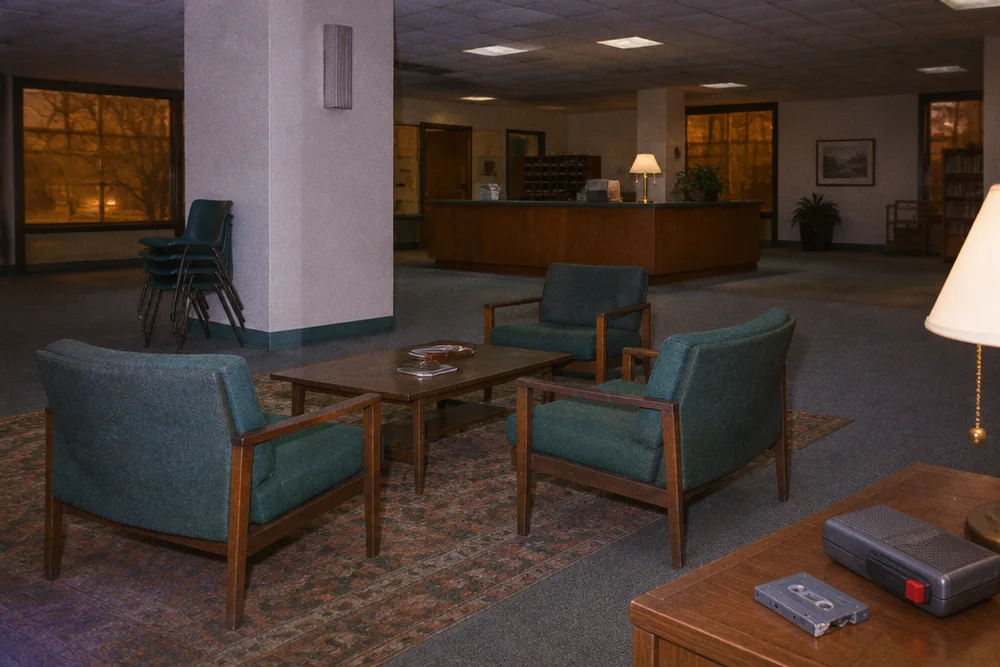
Tamsin asked to see the room. The hall smelled of rope fiber and floor polish. Its hard boards carried the scrape of each step; a single high window looked toward the inner basin, where the water lay slate-colored beneath the evening sky. Behind a square pillar, the sound of the caretaker’s voice thinned until she could hear its shape but not its words.
“That’s the dead spot,” he said from the doorway.
Tamsin walked into it and faced him. “I can hear you.”
“Can you hear what I’m saying?”
“Not all of it.”
The caretaker lifted one shoulder. “People usually put the speaker at the front.”