A Hem Full of Tomorrow
Page 97 of 286
Chapters
“Feel inside.”
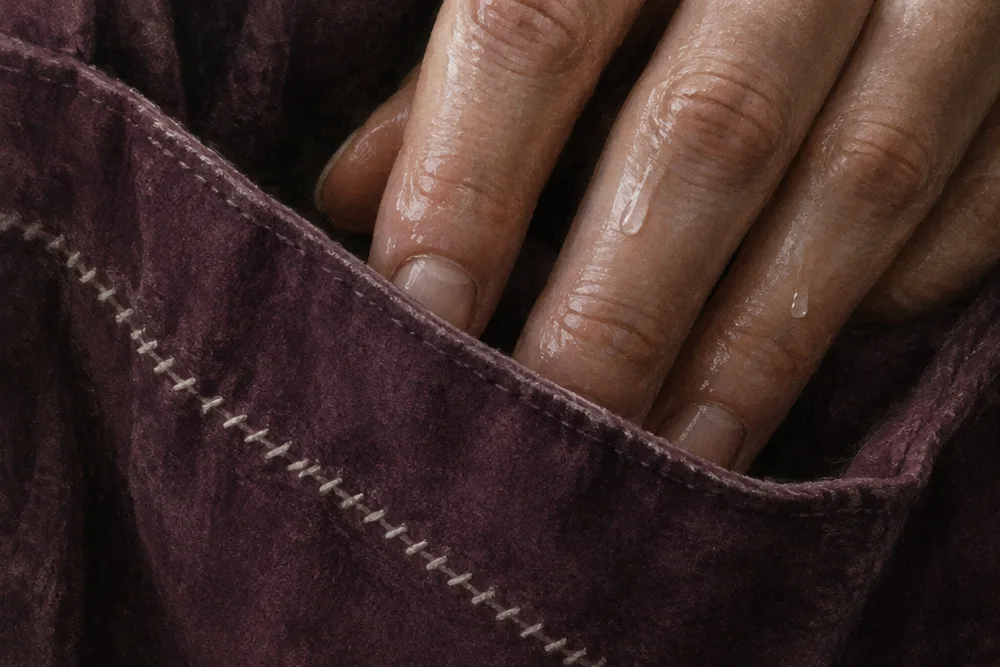
The outer cloth felt dry. In the bottom corners of the pocket Fenna found a cold wetness that stayed on her fingertips. She put her hand farther in and touched the ridge of a seam twice as thick as it needed to be. Someone had reinforced it with a strip of blanket binding. It would stand up to years of hands going in and out. It would take a long time to dry.
“I turned it yesterday,” the woman said. “I turn it every day. On the roof it dries if I get up first and there's nobody with anything bigger. Mostly there's something bigger.”
Fenna recognized her now as the widow Bess had described, the one who had moved into her sister's old room. She had come to the hatch earlier without any washing and had waited behind three people before leaving without giving her name.
“Do you want a turn on the roof?” Fenna asked.
“No. I want to be able to open my window.”
The man who had asked for afternoons pulled his bundle nearer, making a little more space on the rack. The widow put both hands flat on her apron, as if somebody might take it away before she was done.
“I can open it now,” she said. “That's what they'll say if you write it like that. It opens just fine. But the sun gets as far as the yard and then it's gone. My window's one floor above it. I used to dry this on the back of a chair.”
Fenna looked up from the rack. At that height she could see a run of sills, some with cups on them, some with rags tucked into the cracks. There was no clear way to tell which one belonged to the widow. She turned the pencil over and rubbed out the word roof.
“Would you like me to say where the window is?” Fenna asked.
“You'd better see it first.” The widow picked up the apron. “You needn't come inside.”
She led Fenna across the courtyard to a narrow entrance past the kitchen hatch. Two shelf boards had been fixed to the wall beside it, one above the other. On the lower one stood a pan with its lid upside down. The widow moved the pan to the upper shelf so that they could get past without catching the handle.
“My sister always put that up there,” she said. “I keep forgetting till I walk into it.”