A Hem Full of Tomorrow
Chapter 14 · Three Rings, No Nails
Page 172 of 286
Chapters
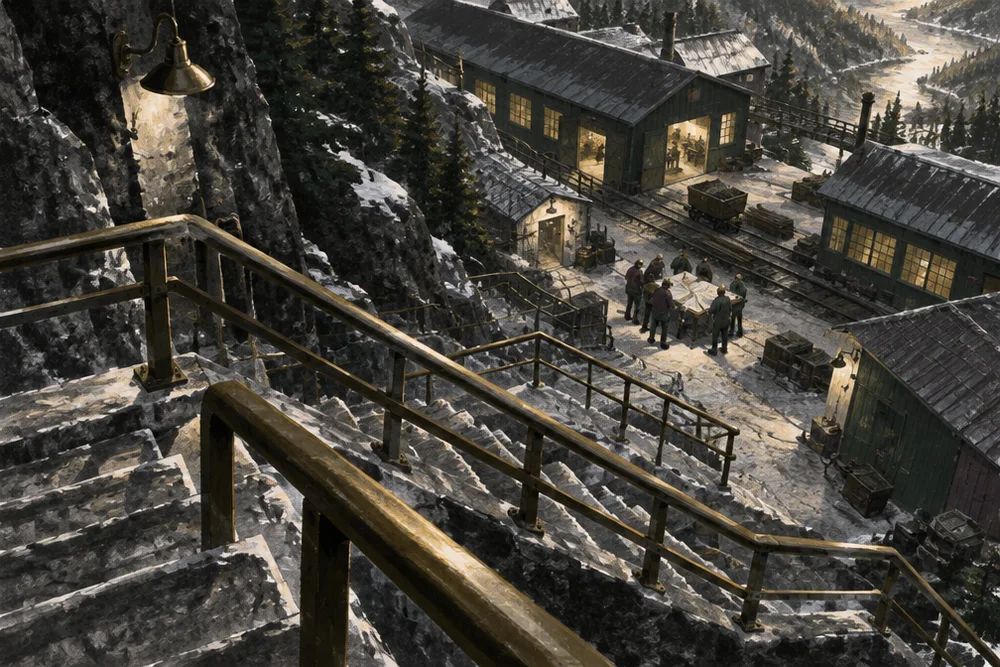
The ridge workshops let out in staggered clatter: first the brass-casters, then the loom floor, then the laundry crews with their sleeves still damp. Fenna waited beside the public switchback with a stack of route sheets tucked under one arm and the daylight ledger under the other. The ledger’s green boards were softened at the corners, its lower edge torn away. She had brought it because numbers spoken aloud seemed easier to dispute than numbers someone could touch.
Dain Pell stood beside her in his soot-blue uniform, his square lunch tin hanging from one hand. He had already spoken to the workers during the shift change. Now he watched them gather without trying to herd them. Fenna noticed that. He used to make a case for his train as if every person who questioned it wanted him and his father stranded. Tonight, he asked what time each workshop’s last bell rang.
“We need one connection held each night,” Fenna said. “Not a promise to wait if the guard feels generous. A listed connection. The lift crew stays on duty, and the last daylight train waits long enough for the people coming down from the ridge.” She laid the first route sheet across a bollard. “The lift cannot be free to run if there’s nobody paid to operate it. The pass can cover the wages, but only if the workshops contribute too.”
A laundry worker named Pellat—no relation to Dain, she clarified before anyone asked—tapped the schedule. “Your first version has us released before the wash is done.”
“I know. We changed that after the trial.” Fenna turned the sheet so the revised times faced them. “The held connection is one per night. It’s not a second train. It’s a lift departure timed to the last daylight service, with the crew paid to wait for that train.”
“And if the train’s late?” someone called.
“The lift waits,” Dain answered. “The new budget has a margin for one delay. If we miss that, we record it. We don’t pretend it didn’t happen.”
The first challenge was not whether the plan sounded fair. It was whether any workshop would put its name beside the cost. The loom foreman said his people already paid a common pass fee. A brass-caster asked why his shop should help carry laundry workers. Fenna let them finish. She had learned that a quick answer could turn a real objection into a grievance that followed her down the hill.
“The pass pays the lift staff,” she said when the room settled. “The workshops pay into the held connection because their shifts make the last journey possible. It isn’t a charity charge for somebody else’s household. Your own late workers will use it.”