A Hem Full of Tomorrow
Page 91 of 286
Chapters
Lio stayed out of the conversation. He could not give them their missing light, but he could bring the record into the room where it might be returned. He could also make sure his name was there when the council asked who had set the first mark.
Before leaving, Lio went once more to the timetable case. The notice for the annual hearing had begun to curl at one corner. He smoothed it back against the glass and read the requirements aloud under his breath: a service budget, testimony from those whose hours would change, and the original signatory for any borrowed allocation.
The three requirements no longer seemed like separate hurdles. The budget would answer whether riders could get home. The testimony would answer what the borrowed light had cost. His name would answer how the railway had made a temporary loan look like a vacant address. None could stand in for the others.
He took the public stairs toward the ridge, not because he expected Bess to welcome him back, but because the hearing date and the daylight schedule were posted there too. At the first landing, he stopped to let a woman carrying a basket pass. At the second, a boy with damp cuffs sat to rest. Lio waited until the boy stood before continuing.
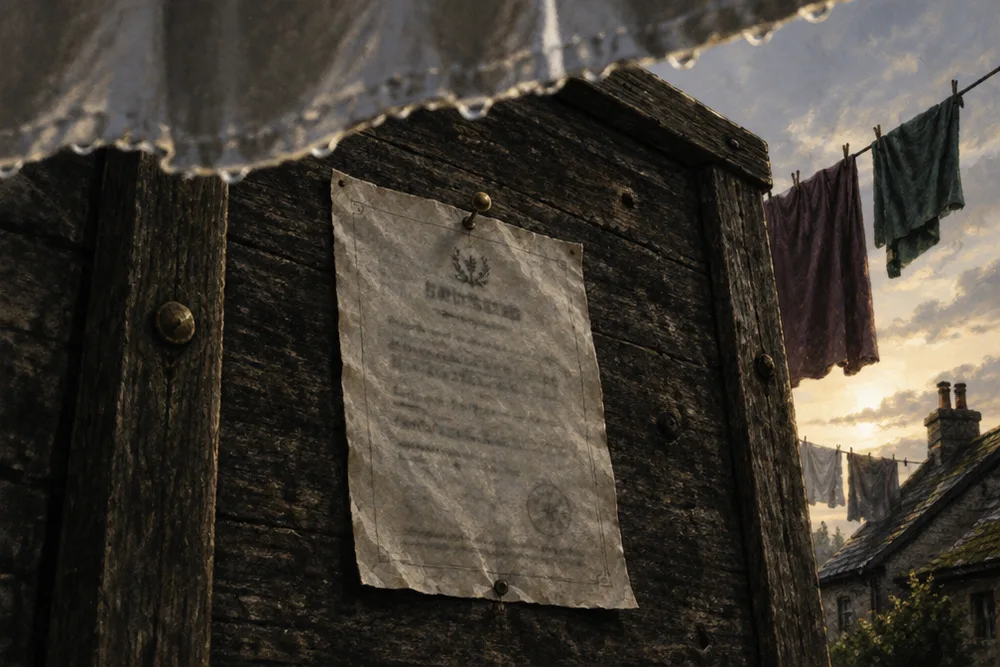
The roofline opened above him, crowded with pegs and patched sheets. The sun had gone, and the shared kitchens were lit from within. Lio did not step into any doorway. He read the notice on the public board, checked the date and the allotted sun window, and wrote them down.
The loan had begun with two initials in a margin. It would not end by erasing them. He would testify under his own name, and if the council asked what the signature meant, he would not answer with the weather, the waiting train or the pressure of the office. He would say what he had done, then make room for the people who had lived with it.
Below the roofs, Selvedge Station’s signal lamps glowed through the cloud. Lio turned away from them and began the descent, carrying no copy of the ledger now. The record was where it belonged: in the hands of those who would decide the next timetable.