A Hem Full of Tomorrow
Page 67 of 286
Chapters
Lio Hedd arrived with his bottle-green coat buttoned wrong at the throat and a roll of old timetable sheets under his arm. He read the ledger without sitting down. “You’re trying to save one run,” he said. “One short run,” Fenna answered. “Earlier departure, fewer stops, enough light back to Ninth Rise to keep the rest of the evening allocation.” Lio rested a long finger beside the care deadlines. “You can’t make a timetable shorter by crossing out the hard parts.” “I know.” She closed the cover before he could turn to the next page. “I want to see whether the signal lamps can be fed by a smaller loan.” The word loan sounded gentler than theft. Neither of them said so.
They met the following morning in the station archive, where the windows were high and narrow and the cloud made the glass look scrubbed white. Lio spread the current timetable beside the old allocation sheets. Fenna had brought the rider count, carefully copied so the paper would not curl under her warm hands. The evening service had three departures after the ordinary commuter rush. The last one was the most lightly used, but it carried passengers whose work ended late and connected with two other lines. To cut it outright would strand people on the ridge or force them down the unlit stairs.
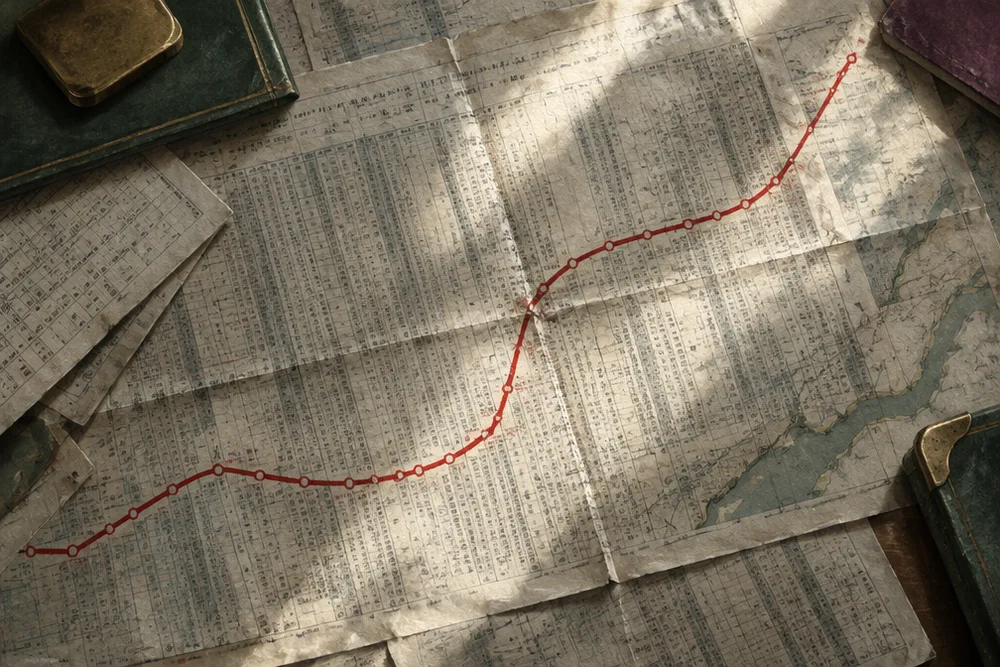
“What if the final train left earlier?” Fenna asked. “Take the shift workers at the end of the main release, make one stop at the lower market, and finish at the interchange.” Lio set his spectacles lower on his nose. “You have moved the train. You haven’t moved the signal demand.” “If it only runs to the interchange, the lamps need less time.” “Some less.” He took a ruler to the schedule, drawing the proposed route in a narrow red line. Fenna leaned in, following the track with a finger. The line looked tidy. A tidy line was not the same thing as a workable journey, she reminded herself, but it was a place to begin.
Lio found the signaling table in a green-backed ledger with a torn lower corner. Its entries recorded the light consumed by each stretch of track, each stop, and each pause for a crossing signal. Fenna put her rider figures alongside the calculations. The shortened route looked possible until Lio reached the lamps on the ridge approach. They needed to be lit before the train came through, and held bright until the rear carriage cleared the signal bridge. The train could travel fewer miles and still demand most of the borrowed daylight.