A Hem Full of Tomorrow
Page 278 of 286
Chapters
The committee asked for a month’s trial. Fenna asked for the extra wage to be shared even if the pass count dipped. Dain tapped the fare sheet with one blunt finger. “If the crowd is late, it’s still a crowd. The clerk stays until the lift is clear.” That changed the calculation: not just a wage for handing out tokens, but for keeping the route workable when a connection ran behind. The committee voted to cover the rush shift from the common pass, with Dain reporting the actual hours and Fenna reporting the work displaced. No one called it charity.
The next morning, the clerk arrived before Fenna had finished unlocking the street latch. He was a narrow-shouldered man named Elt who had been collecting pass fares at the lift landing, where cold air came up through the stairwell. He pinned his coat on the first hook and asked where the numbers began.
“One through twelve for passes,” Fenna told him. “The hooks stay here, not on the door. If a person has an order, don’t send them away just because they’re holding a token.” She showed him the small slate where he could mark a delayed pickup without holding a place in the queue. “And if the lift is held for a late connection, write that down. Don’t promise a departure until Dain confirms it.”
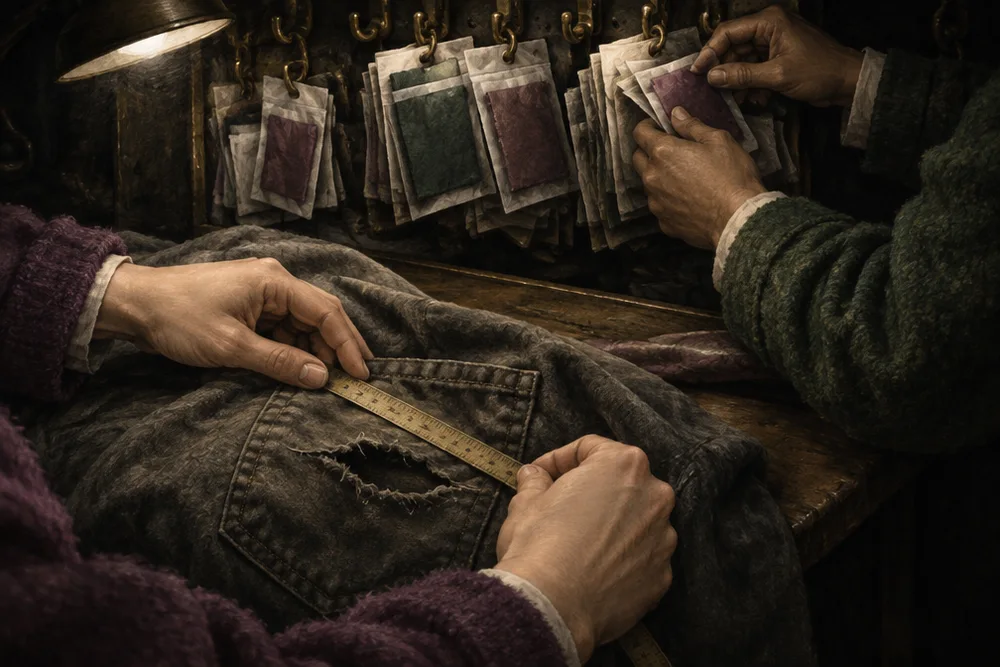
Elt looked from the slate to the brass hooks. “You’ve made a timetable of the counter.” “I’ve made a way for people not to argue over the same patch of floor.” Fenna pushed the first pass packet toward him. “The counter is smaller than the landing. It needs better manners.”
The first rush brought a dozen people, then another four. Elt handled the pickups; Fenna took the fittings in order, and the doorway stayed open. A commuter who had come to complain about the extra walk to the booth left with a pass and a receipt for a torn pocket. A young worker waited ten minutes for a sleeve measurement instead of leaving for the platform. Fenna wrote the delay in her book anyway. She did not want a good morning to become evidence that the arrangement needed no wage.
The month did not run smoothly. On the third day, a ridge shift released early and the pass queue doubled before Elt had opened the hatch. On the sixth, a lift inspection delayed the first pickups, and a woman with a child’s patched trousers stood waiting while Fenna tried to hear two sets of instructions at once. The hooks helped, but they did not make the room larger.