A Hem Full of Tomorrow
Page 266 of 286
Chapters
The workshop delegates began working through the hours. The lift opened after the last daylight train and stayed staffed through the staggered shift releases; a collection hatch would need to be open before the train and for a short stretch after the lift connection. Fenna checked the times against the hours when she could realistically keep the iron hot and take fittings. She would not sew while counting pass slips. She would not promise a repair by morning if the hatch had kept her all evening.
“Two hours at the hatch, four evenings a week,” Dain proposed. “Paid at the agreed clerk rate. The committee contributes that wage from pass receipts, and the workshops cover the shortfall if the count falls below the budget.”
“For the trial,” Fenna said. “Review it after six weeks. If the queue needs more hours, we discuss more pay. If there’s no queue, you don’t keep paying me to sit in an empty room.”
“That’s fair,” the delegate said. She made a note, then looked at the rent figures. “We can pay the owner directly for one quarter of the rent as a collection-space contribution. Not the whole amount. You keep the lease and the risk.”
Fenna did the arithmetic in her head, then again on paper. The contribution and the separately paid hours meant she could keep her current mending prices and still make the deposit. It would be a narrow margin, but a margin she had chosen rather than one hidden in raised prices.
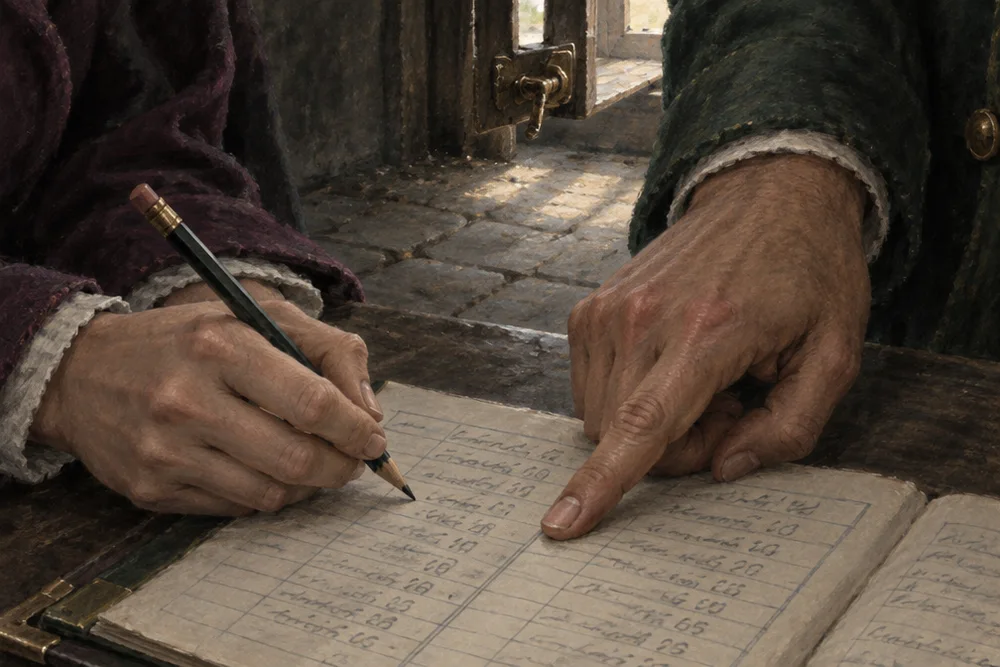
Dain tapped the table. “You’ll need a sign that says the hatch is for pass pickup. Otherwise they’ll all bring you their socks.”
“They can bring their socks,” Fenna said. “They’ll have to wait their turn.”
The committee agreed to recommend the arrangement to the pass clerk and the booth’s owner. No one called it a rescue. Fenna preferred that. They were buying work they needed, and she was taking a room she could not yet sustain alone. The terms remained terms, with names beside them and a date for review.
When the clerk finished the draft, she turned it so Fenna could read each line. Fenna corrected the phrase “shop assistance” to “staffed collection hours.” The distinction mattered. Assistance could be withdrawn as a kindness; hours belonged in the budget.
The booth owner met them at the stair-bottom the following morning. She had brought a lease form and a ring of brass keys, though the particular key was still on a separate hook. The booth smelled of old paper and stone dust. Its floor sloped slightly toward the door, and the window latch stuck halfway open.