A Hem Full of Tomorrow
Page 258 of 286
Chapters
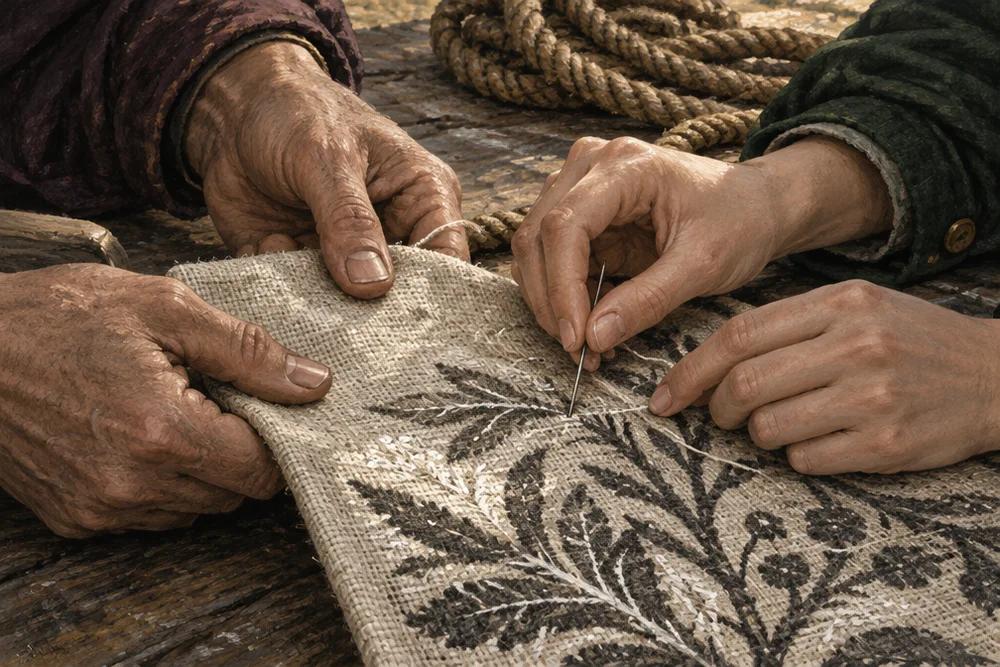
Bess bundled the slack rope out of the way and carried the ruined wrapping over to the wash bucket. Fenna pulled her chair back to the table, this time leaving a pot’s width behind it. She opened her book at the order and put the old timetable notice beside it, blank side up. Across the yard, Bess lifted the cupboard latch.
The courtyard filled by increments. Bess brought rope samples from a cupboard beneath the wash stairs; a tenant brought two broken pegs; another carried a length of canvas stiffened by repeated rain. Fenna measured each line and wrote the figures down, using the back of an old timetable notice when her book ran out of space.
“This one’s a hand wider than the roof line,” Bess said, holding up a strip of canvas. “If you stitch it close, it’ll pull the rope crooked.”
“I can leave a channel and bind the ends,” Fenna said. “The rope passes through without rubbing the cloth.”
“How long?”
“For the first four? Two days.”
“We need them sooner.”
“Then you need more than one pair of hands.” Fenna looked around the table. “I can cut and mark. Someone else can sew straight seams, if they’re willing. I’ll check the load-bearing stitches before they go up.”
A young man from the shared kitchen took a needle from Fenna’s kit. “I can sew. I’ve been patching work trousers since I was twelve.”
“Then you should be paid too,” Fenna said.
He glanced at Bess. “I live here. I can give the first one as my share.”
“You can choose that,” Fenna said. “But the order has a price for the work. If you want your share paid, there’s room for it.”
The man turned the needle between his fingers. “Put me down for one sleeve at the rate you’d pay someone else.”
Bess made a note. Fenna felt a small ease in her chest, not the comfort of an answer that solved everything, but the click of a fair arrangement taking shape. The sleeve would not make another roof line. It would keep fabric from tearing when a line was used. A small improvement, built out of paid hours and neighbors’ skill.
They laid out the cloth on the stone floor. Fenna marked the channels in chalk and pinned the edges with brass pegs from her own tin. Bess checked each measurement against the lengths she had carried down. The courtyard was full of practical disagreements: whether a sleeve should open at one end, whether a peg could pass through without catching, how much allowance to leave for wet canvas.