A Hem Full of Tomorrow
Page 20 of 286
Chapters
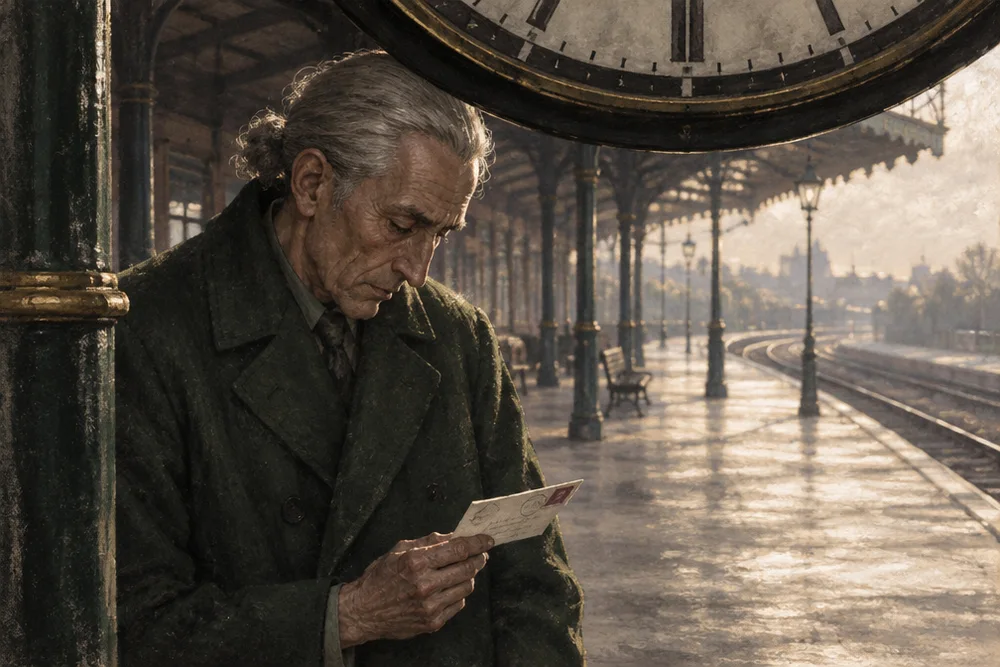
Outside the archive, Lio stopped beneath the station clock. The first train had already gone up through the cloud. Its departure bell had left a faint tremor in the brass fittings, or perhaps that was only the old station settling. He took the certified copy from his pocket and read it again: Ninth Rise, 9—14—B. The clerk’s stamp made the words official. It did nothing to make them bearable.
He had been fifteen when his mother started sending laundry down to the lower city for a customer. She had tied the bundles tight and marked each one with the crossed pegs. On some mornings he carried the clothes down himself, using the public switchbacks while trains thundered overhead. Later, when the railway paid him as an apprentice, he learned to read the timetable columns and found that each journey could be divided into a cost. Minutes. Coal. Passenger loads. A signal lamp’s draw.
The old neighborhood had never appeared in the figures as anything but a line of houses. Lio had accepted that. He had accepted that the railway needed the ridge’s clear daylight for its signal lamps during evening service. He had accepted the temporary cloud-season loan. He had accepted the explanation that the terrace was vacant, and the empty columns that followed. By then his parents were dead; the house had become a place he could afford to remember only in fragments.
He went to the reading room again and asked for a copy of the original entry, not merely the certified address. The clerk returned the ledger to the stand. Lio examined the surrounding pages. The laundry mark appeared beside several households, each with its own line. A note said the roof owners allocated drying space by season. A later note recorded a change to the neighborhood’s status: vacant for service purposes.
“Do you know who made this entry?” Lio asked.
“There’s no initials in this column.”
“Who authorized the change?”
“That would be in the allocation file.”
The clerk hesitated before saying it. Lio knew the hesitation. He had taught three generations of clerks the difference between a request and an attempt to leave a record. “I’ll need that file.”
“It may take time.”
“I have time.”
The railway had always told him that time was what it lacked. He left the archive with the stamped address and the old laundry mark in his mind. In the pressroom, Fenna was trying to hold open a window that had been shut for decades. The least he could do was find out who had put the latch there.