A Hem Full of Tomorrow
Page 158 of 286
Chapters
The foreman at the cutting room did not sign. He said he needed to see the cost per worker. Fenna wrote that down too. She did not try to persuade him with the eleven minutes Bess’s people had been given. That was evidence for the hearing, not a substitute for a workable agreement.
“Bring the price,” the foreman said. “Then I’ll tell you yes or no.”
“I will.”
On the walk back, Dain read the signatures. “This is not enough to prove the pass will cover the staff.”
“No,” Fenna said. “But it proves they’ll change their hours if the minutes are paid.”
“And you’ll have to make the riders part of it.”
“I know.” She was tired enough to feel the old raised shoulder ache. She let it drop as they reached the station steps.
Dain stopped at the foot of the station steps. His lunch tin had gone quiet against his leg. “I’ll canvass the riders,” he said. “Not on duty. I’ll ask them what they need and what they can pay for. If we’re asking for a common pass, they should hear it before it turns up on a council sheet.”
Fenna looked at him. “You don’t have to make the case for the railway.”
“I’m not.” He gave the slate back. “I’m making the case for getting home. There’s a difference.”
He named the first riders he would speak to: the porter, the machinists, the woman with the medicine. He would ask what time they needed to be down, which connection they could not miss, and whether they would accept a held lift instead of a late train. He would not promise they would say yes.
Fenna tucked the signed conditions into her pocket, behind the page where the failed five-ten departure had been crossed out. At the next hearing, the railway would have to answer for the light it had borrowed. But the replacement could not be an answer made only of blame. It would need wages, a clock, a bell, and people willing to ride it.
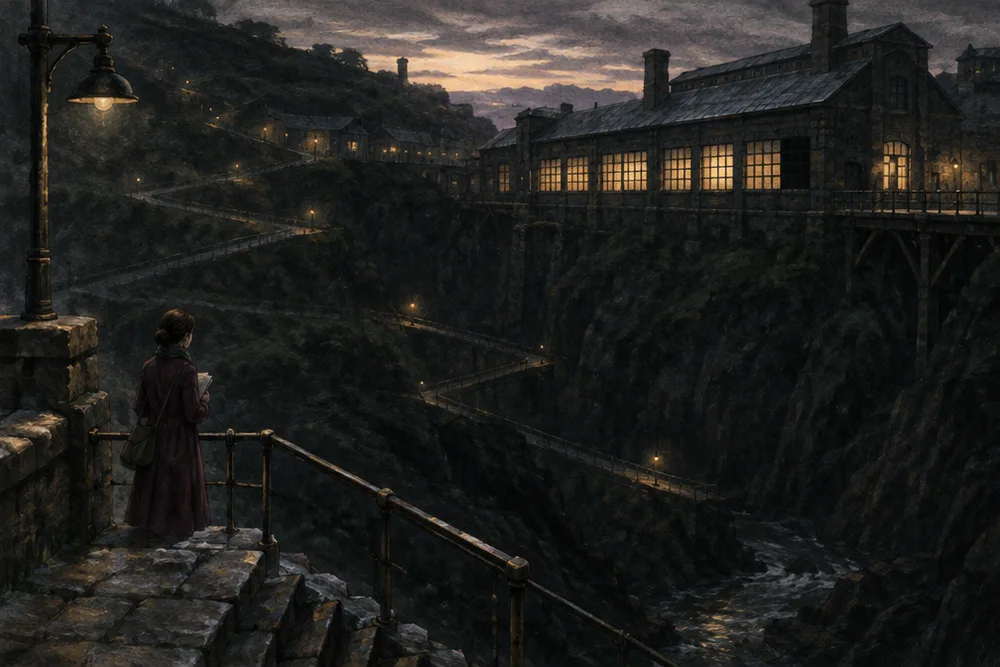
Above them, the ridge workshops went dark in uneven stages. The laundry windows stayed lit longest. Fenna watched until the last square of light vanished, then turned toward the station, carrying the first part of a route that others had helped set.