A Hem Full of Tomorrow
Page 131 of 286
Chapters
“Take it down,” Bess said.
“One moment—”
The curtain folded inward around the sagging seam. The red line kinked, then disappeared into a pleat. The stitched address broke apart as one fold crossed another. For a blink Fenna saw a strip of roof and a pale blur beyond it; then the fabric doubled over and Bess’s image vanished.
Fenna caught the bottom edge before it dragged on the floor. The clerk steadied the frame. Bess did not move to help until Fenna had taken the weight and lowered it into her arms.
“I saw her,” Fenna said, though she knew Bess had seen the fold too. “The view opened for a second.”
“A second is not a hearing.” Bess’s voice was not cruel. That made the words land harder. She lifted her wet bundle and held it against her side. “Tell me when you have a way to keep it open.”
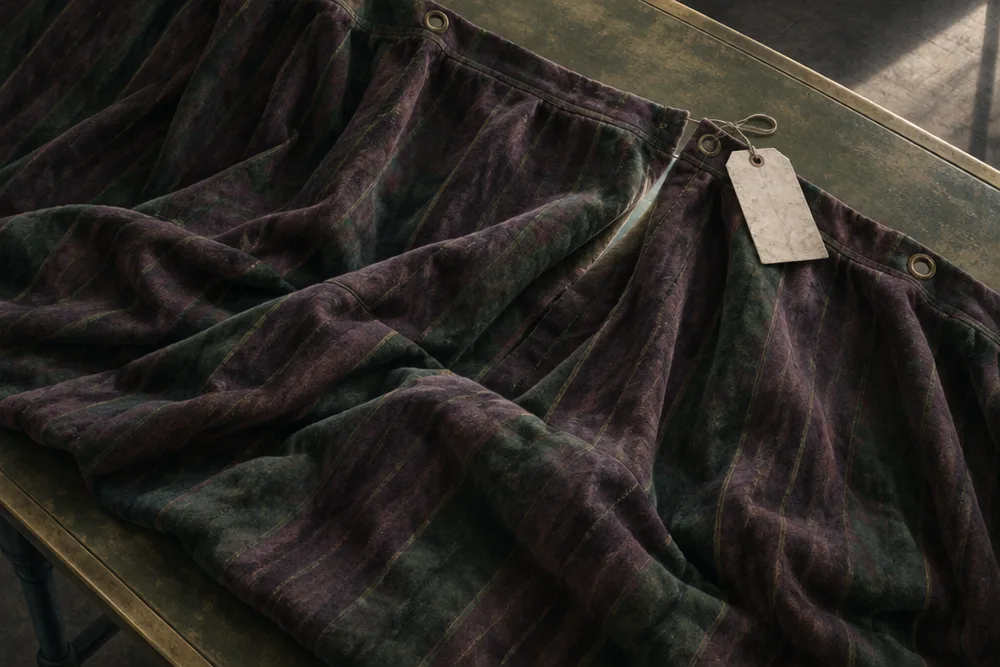
Fenna laid the curtain across the table and smoothed it with both hands. The cloth was not torn further, but the seam had acquired a sharp crease. She could feel the shape of the absent ring in the tension it had failed to carry.
The clerk recorded that the display had been taken down without damage. Fenna asked him to include that the cloth had buckled and the view had closed. He wrote it down, then asked her to sign the note. She did.
Bess stood by the doorway, the laundry bundle settled against her hip. “I’m going back. There are people who need to know the inspection hasn’t made it usable.”
“I’ll come when I have something better than two hooks and a hope.”
“Come when you have a plan.” Bess turned toward the station steps. “Not when you need me to say it’s fine.”
After she left, Fenna gathered the curtain’s folds away from the red seam. She had asked for a test because she could not bear to arrive at the hearing with a guess. Now the test had answered: the display could not be trusted with the ring missing.
Her wages were suspended. Her access was suspended. The one public opening she had meant to preserve was folded shut in her hands. Fenna carried the curtain to the inspection table, careful of the strained seam, and left it there under the clerk’s tag. The missing ring had become more than a piece of brass. It was the gap in every plan that depended on people being allowed to do their work.