What the Station Keeps Warm
Chapter 6 · The Blank Heat Source
Page 50 of 207
Chapters
Iona Bellack laid the meter sheets across the laundry counter and pinned their corners with four brass name clips. The night shift had left the room blue-violet and quiet: frosted door, enamel machines, the unplugged dryer bolted over its obsolete radiant fins. Its round window reflected her square face and black wedge of hair. She stood heel-first in plum coveralls, as if the deck might make an argument and she meant to hear it first.
The charge was printed in a tidy column at the bottom of the station’s monthly account: laundry heat, recurring, seven years. It had been small enough to pass unnoticed until the lender reviewing her cabin loan asked why her department used so much heat when its primary equipment was electric. Now the number sat between her saved deposit and the cabin’s independent lock, an obstacle with a date attached.
Iona had expected a cracked pipe. A pipe could be located, photographed, repaired, and billed to the right account. The meter sheets suggested something less cooperative. Laundry’s current draw dropped to almost nothing during the hours the heat charge rose. On two nights the dryer’s circuit registered no use whatsoever. The heat invoice, however, remained as punctual as sunrise against the station’s sunward gallery.
She sorted the sheets by date, then by meter number, using the battered ruler she kept for folding linen into exact stacks. The figures did not change when she turned them upside down. An old tariff code appeared on every heat line, but the account office had not supplied its description. She marked the code in red and wrote beside it: NOT ELECTRIC?
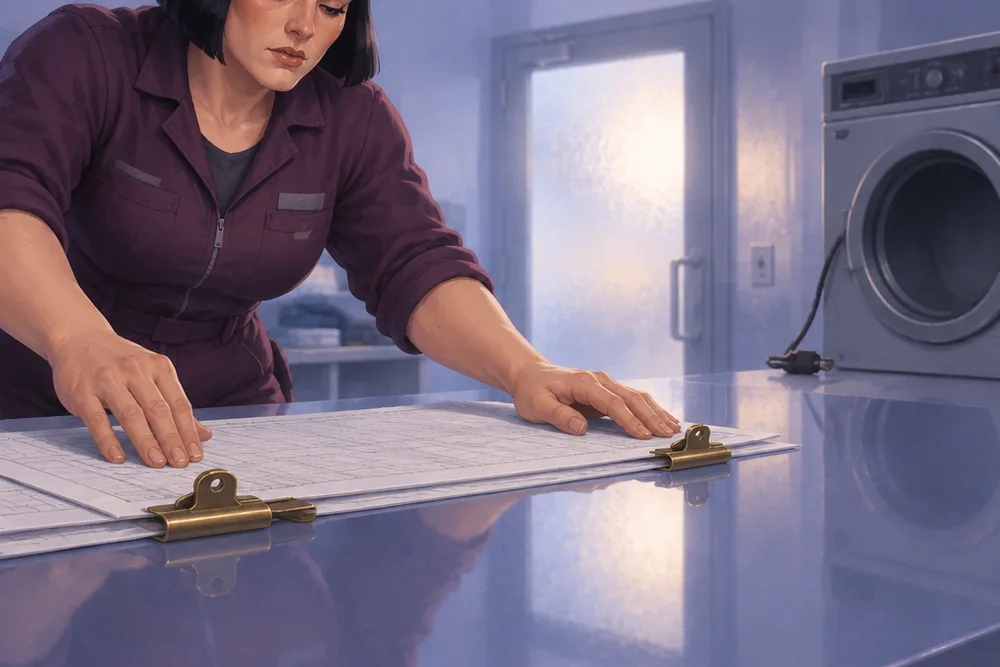
The lender’s reconciliation window lasted five more days. If she could explain the charge before then, the loan officer would keep her application active. If she could not, her deposit would remain hers, technically, while the cabin went to auction and the money she had been saving for a home became merely money again. Iona disliked how easily a column could make that distinction.
She checked the meter cabinet at the far end of the laundry. The seals were intact, the indicator dark. A thin skin of frost clung to the cabinet’s lower hinge, and the pipes ran behind the wall toward the cold outer curve. She took a flashlight, a spanner, and the meter sheets. A cracked pipe was still the likeliest explanation. She would start there.
The pipe run disappeared behind the old linen press, where lint had gathered in soft gray drifts. Iona drew the press away from the wall, careful not to scrape its feet across the deck. She found the inspection strip, rubbed the dust from it with her sleeve, and read the last service date. The pipes had passed inspection. No leak, no pressure loss, no unauthorized branch. The maintenance mark was old but clear.