What the Station Keeps Warm
Page 203 of 207
Chapters
The next day, the first gathering began with the laundry door propped open. People came in ones and twos, some carrying shirts or pillowcases, some carrying nothing at all. A caption line scrolled on the wall: OPEN HOUR. SINGING, LISTENING, WASHING, OR LEAVING ARE ALL FINE.
Tavi stood by the signboard, signing with a volunteer interpreter who spoke the same words aloud for those who needed them. They had set a low table with cups of water and a box for written comments. No collection tin. No list of contributors. The trust had refused to make a public ritual into a payment window.
Iona came in with the shift’s clean towels. She put the cart out of the traffic lane and stayed near the linen counter, where she could work without becoming a host. Lio Fenner arrived in his rust apron, dark coiled knots tied back from his split eyebrow. He perched on his toes, grinned at someone by the door, then rolled up his sleeves and began to fold dishcloths.
People did not immediately sing. A woman checked a load of sheets. A child sat on the floor to watch the dryer drum turn as someone tested it by hand. Two residents exchanged a brief, silent conversation across the room. The session was not a performance waiting for its first act. It was a room people could use.
Then Lio sang a line into the space between the machines. His voice was low and unpolished, with a bright edge that made the vowels carry. He did not step forward or ask for anyone’s attention. He kept folding, looking down at the cloth in his hands.
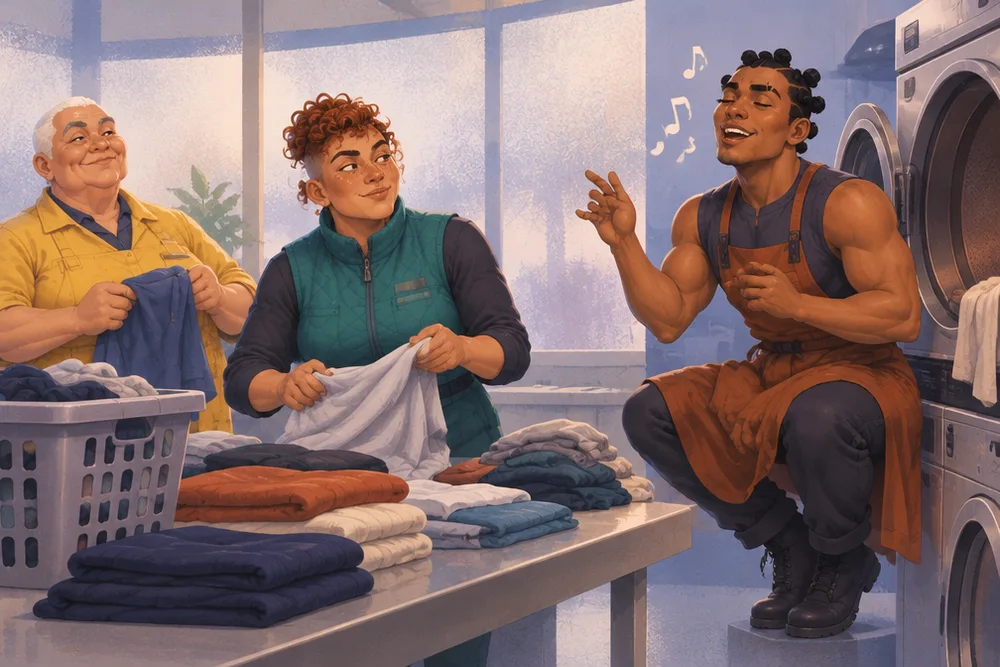
The dryer’s casing warmed by degrees. No sound came from it. The floor reading, visible on the little trust display, shifted a fraction upward along the marked deck. The backup line remained idle. A few people glanced at the number, then went back to what they were doing.
Tavi watched the room, not the display. When a resident approached the open door and hesitated, Tavi moved aside to leave the way clear. The resident entered, picked up a laundry basket, and began sorting shirts at the table. No one asked whether they planned to sing.
Iona carried the towels to the shelves. The machine had accepted a voice, but the room had accepted people first. She understood, now, that the order was part of the mechanism too.
The open hour ended without a bell. People drifted out when they were ready. Lio left last, wiping his hands on his apron. He paused beside Iona and tapped two fingers against the counter to catch her eye.