What the Station Keeps Warm
Page 107 of 207
Chapters
Tavi had been precise about that distinction. In the tailor stall, they had pinned diagrams at signing height and written their conditions in block letters. Tavi would help trace heat, not people. Iona had promised she would not make the pilot depend on identification. If a person chose to sing, the dryer stored warmth. It did not record the voice or replay it. The benefit moved through metal and floor, not through a list of contributors.
That meant the backup plan needed a trigger that could be read without checking anyone’s participation. A temperature threshold, measured at the coldest connected point, would do. If it fell below the agreed baseline, the station’s standby heater would start. The reserve could be treated as a contribution to the heating network, not as a substitute for the station’s duty to keep the deck safe. Iona wrote that sentence in the margin, then boxed it so it would survive the committee’s edits.
The standby heater would cost money even when unused. The savings from reducing rentals elsewhere could fund its readiness, but only if the department accepted the pilot. It would also need an inspection. The fins were old, and the dryer had never been approved for this purpose. Iona could not recommend moving it or opening the casing until an engineer assessed the cradle. The warmth had never been tested against a safety standard. A device that warmed floors could also overheat a cable, a seal, or a tenant’s sleeping space.
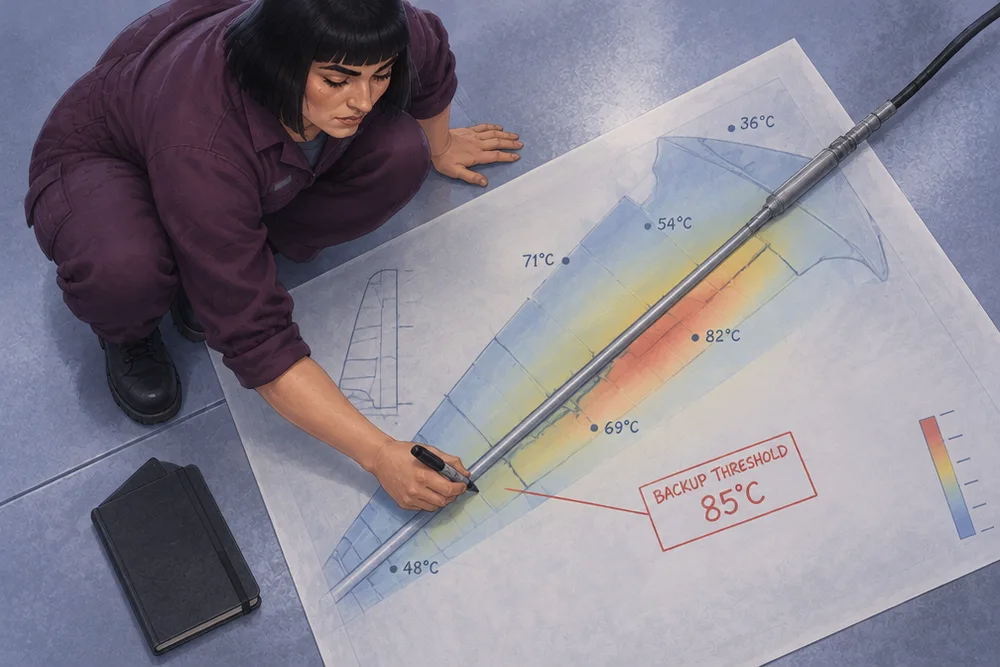
She made a list of what her figures established: probable route, observed reserve decline, heater usage patterns, possible savings. Beside it she wrote what they did not establish: safe operation, legal ownership, reliable contribution, enough heat for every cabin. Her hand slowed at the last item. The pilot was not a solution for every person who lived on the cold curve. It was a narrow service with a broader responsibility around it.
At the end of the shift, she carried the papers to the assembly hall, where Sef had left a message asking for a preliminary cost sheet. The public budget chamber was empty except for the pearl-white lights and a row of movable benches nested against the wall. The caption screen displayed the station’s overnight notices in small, crisp lines. Iona set the papers on the nearest bench and began arranging them in the order she expected Sef to read.
He arrived before she had finished. His gray braid lay over one shoulder, and the slate suit made his lanky frame seem folded inward. He looked first at the map, then at the heater invoices. “You have a service estimate?” he asked.