What the Roof Gives Back
Page 218 of 229
Chapters
Vera passed them on her way to the gate, taking her time on the uneven grass. She wore no badge, carried no key, and had no reason to stay late. At the path she paused, looked back once at the roof, and went on. Rianne felt the ache of that departure and the relief of it together. A handover was not a way to keep a person from leaving. It was a way to let them leave without taking the knowledge with them.
Dina closed the program box. “That went well,” she said, not as a verdict but as an opening for correction.
“It did,” Rianne answered.
“The staff can run it. Kit can lead it. If next season proves we need more time, we’ll adjust the hours.” Dina set the box on the cart and checked that the path was clear. “I’m not promising it will be effortless.”
“It shouldn’t be,” Rianne said. “Just possible.”
Dina’s brows lifted in approval. She pushed the cart toward the shed, where the equipment would be stored and checked before the next maintenance round. Kit followed with the apprentices. The retired crew members left in pairs, talking beneath the low branches.
Jonah leaned against the table. “You’re done?”
“With the restoration.” She looked at the canopy, then at the six rows, now nearly empty. “Not with the place.”
“That’s a useful distinction.”
“I learned it from someone who knows when not to sing.”
He pressed a hand to his chest. “That is not a compliment I’m used to.”
“You’ll have to make do.”
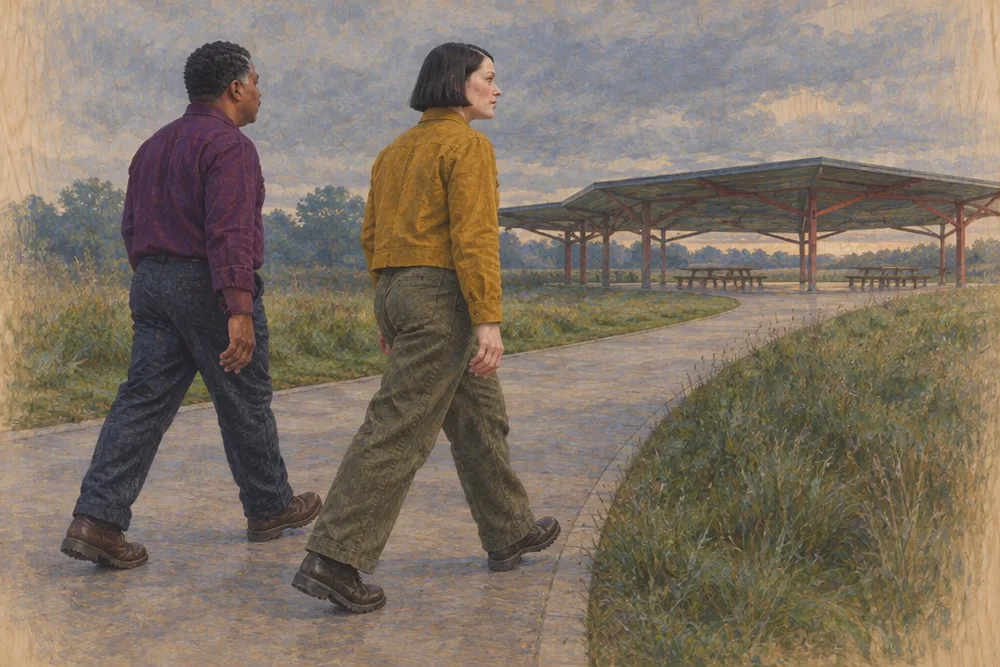
They smiled at each other. The last light of the day had softened the wet grass, turning the iron-red braces beneath the roof a muted, warm shade. The open sides held no shadow of an audience now, only the echo of the crowd dispersing and the practical clatter of the grounds crew at work.
Rianne and Jonah took the path together. She chose the inside edge, where the grass rose slightly above the paving; he matched her pace without reaching for her elbow. At the bend, she looked back at the canopy. From here the panels were almost invisible, their work legible only in the way the roof seemed to gather the last talk from the lawn and give it back.
The bandstand no longer required a singer to stand on the chalk mark. It did not require Rianne to explain its design, or Vera to keep the old key, or Kit to wait for permission before taking responsibility. It required maintenance, and listeners, and a staff schedule that valued the hours it took to pay attention. The roof could work without becoming anyone’s private burden.