The Weight of One Thimble
Page 44 of 184
Chapters
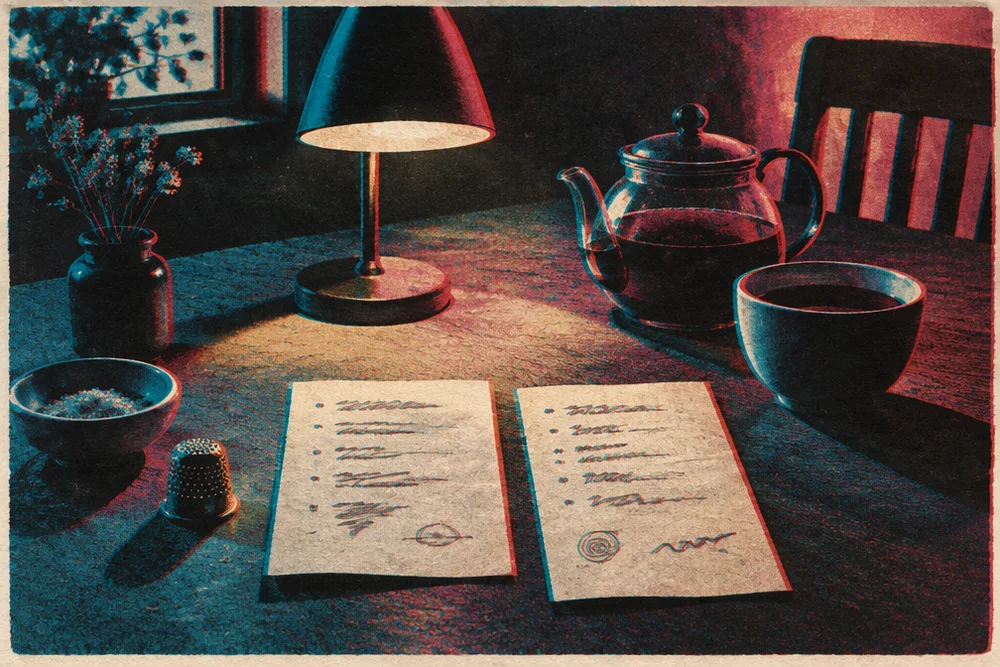
At home, she spread her notes across the kitchen table but kept the source photographs in their sleeves. The apartment faced inland; from its small window there was no harbor, only a brick wall and a slice of cloud. She made tea and forgot to drink it. At the top of a clean sheet she drew two columns: what the records showed; what they did not show.
The first column filled quickly. An 1889 public passage deed existed. It referred to stair construction and maintenance. A subscription account was cross-referenced. In 1912 the deed was listed with terrace possession files and delivered to the court as an exhibit. The court catalogue confirmed receipt. The old index’s status differed from the transfer evidence. Household contributors lived at addresses later included in the eviction bundles.
The second column stayed shorter, but the blank space felt more important. She did not have the deed itself. She did not have the court’s full hearing record. The account’s entries were not yet independently checked against probate records. The signatures and seals remained to be examined. None of that erased the first column. None of it entitled her to pretend she knew the end of the story.
Her phone lit again with a message from Neri: COURT ARCHIVE CONFIRMED. REGISTER AND TRANSCRIPT ACCESS AT OPENING. EXHIBIT ENVELOPE MAY BE SEALED. He had added a photograph of the docket’s index line, cropped to fit the screen. Number 6. North stair deed. Retention: court archive.
Mara enlarged the image until the letters broke into pixels. The next morning, she would have to ask for the physical register and the transcript. If the envelope was sealed, she could not unseal it on her own authority. She could document its condition, request the custodian, and let the process take the time it took. Time was the one resource the council’s timetable did not give her.
She poured the tea into the sink. On the table, the two columns sat beneath the kitchen lamp, one dense and one nearly empty. She added a third line beneath them: “Who benefits from separating them?” She did not answer it.
Then she packed her notebook and camera, checked that the spare battery was charged, and set an alarm. Outside, shutters had closed across the town. Tomorrow at noon, the judges would carry the chest downhill; after the procession, the council would vote. She had spent the day discovering that the stairs’ title and the terraces’ removals belonged in the same account. In the morning she would find out whether the court’s records agreed.