The Weight of One Thimble
Page 32 of 184
Chapters
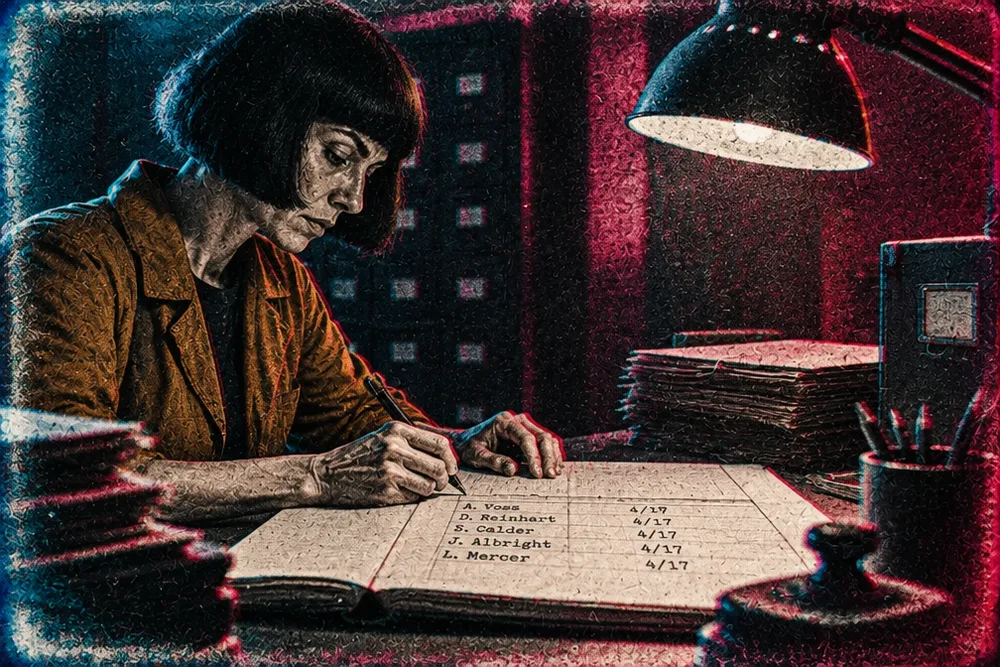
She paused before adding the five accounts. Then she wrote them down: north strip, market strip, well strip, ferry rise, upper turn. She recorded that household names and amounts were associated with individual land descriptions, and that a marginal reference, 4/17, appeared beside the wording “passage kept for all.” She did not write “deed.” She did not write “public title.” She did not write “gift.”
The evidence log had a box marked “Proposed conclusion.” Mara left it blank. Beneath the entry she added a request to locate the land list and examine the referenced instrument before any certification. Her hand cramped around the pencil. She flexed her fingers and looked at the clock above the counter.
It was not yet midnight. The deadline was less than twelve hours away.
From the service corridor came the sound of Neri’s steps. He appeared with his teal vest unbuttoned and a stack of docket folders held against his chest. “You found something?”
“A trail,” Mara said. “Not the deed.”
He glanced at the log, reading the words without touching the page. “Tobin will want a conclusion by morning.”
“Then he’ll have to wait for the evidence.”
“He may not.” Neri set the folders down. “The old municipal index has been moved twice. If you need a land list, tell me before the counter opens.”
“I need the list at 4/17. And any older duplicate.”
Neri nodded once, already thinking through the archive’s shelves. “I’ll look before dawn.”
Mara capped the pencil. The number sat on the page, connected to an account she had not been permitted to take and a deed she had not found. She had arrived at the pawnshop looking for the origin of a thimble. She left with the first credible direction toward the ground beneath Bellwick’s stairs.
She returned to the conservation room and set out the inspection image, her notes, and the log in a straight line. The image showed the ticket at the angle it had rested inside the iron chest. Its edges were browned, its fold pressed flat by years of storage, and its last digit obscured where the paper had split. The ledger’s copied sequence was clearer than the original, but it did not repair the ticket or prove who had placed it there.