The Weight of One Thimble
Page 26 of 184
Chapters
“Open to whom?”
“Keep reading.”
Sella turned the leaf. The second account was headed “Market strip.” It began with the same names, but in a different order. Beside them were amounts, and beside the amounts were descriptions of the people’s homes: upper terrace, ropewalk row, east court. Mara copied each line without trying to make it a family tree. The entries belonged first to the account, not to her theories.
Outside, the fishmonger’s shutters rattled down. The sound carried through the glass, sharp as a dropped tool.
“The market strip,” Mara said, following the heading. “That’s the stair by the ferry market?”
“The one you came down on.”
She pictured the route: the stair narrowing between two walls, a turn at the landing, then the descent toward the stalls. “I thought the town had built that.”
“The town repaired it. The town put its name on the railing. Those are not the same thing.”
The third account listed “well strip.” The names and amounts continued, but the measurements changed. There were references to a wall shifted by a hand’s breadth, a drain moved, a landing widened so that a porter could pass with a load. Mara felt the familiar pull to sort the details into a neat sequence—fund, construction, ownership. The entries resisted it. A payment might buy stone, a day’s labor, or a right to use the ground. Some lines did not say which.
“Do the accounts say who owned each piece?”
“Not in this column. They say who paid toward making a way across it.” Sella turned to the margin, where a narrow hand had added a cross-reference: “land list, fol. 42.”
Mara wrote down the reference. “That could match payments to the strips.”
“It could.”
“You’ve seen the land list?”
“Not in this ledger. I’ve seen the reference.” Sella did not look up. “It’s the difference between a clue and a document.”
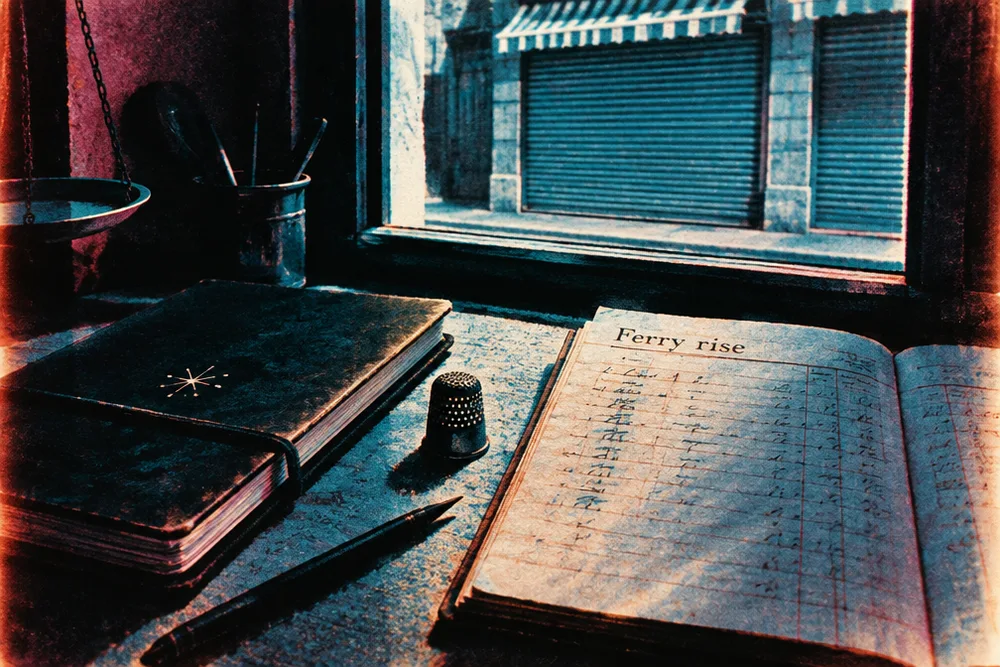
The fourth account was headed “Ferry rise.” It held fewer names and larger sums. One payment came from a household that had contributed nothing to the first two strips. Another was marked “labor only.” A final line named the seamstress without a first name, with an amount beside it larger than the three pennies from the pledge. It had been paid in installments.
Mara copied the line. She could feel the story trying to arrange itself around the seamstress, to make her the founder, the center. But the ledger’s grammar gave her no such permission. The woman had begun something; others had carried it forward. The entries showed contributions, not a heroine’s intention.