The Weight of One Thimble
Page 125 of 184
Chapters
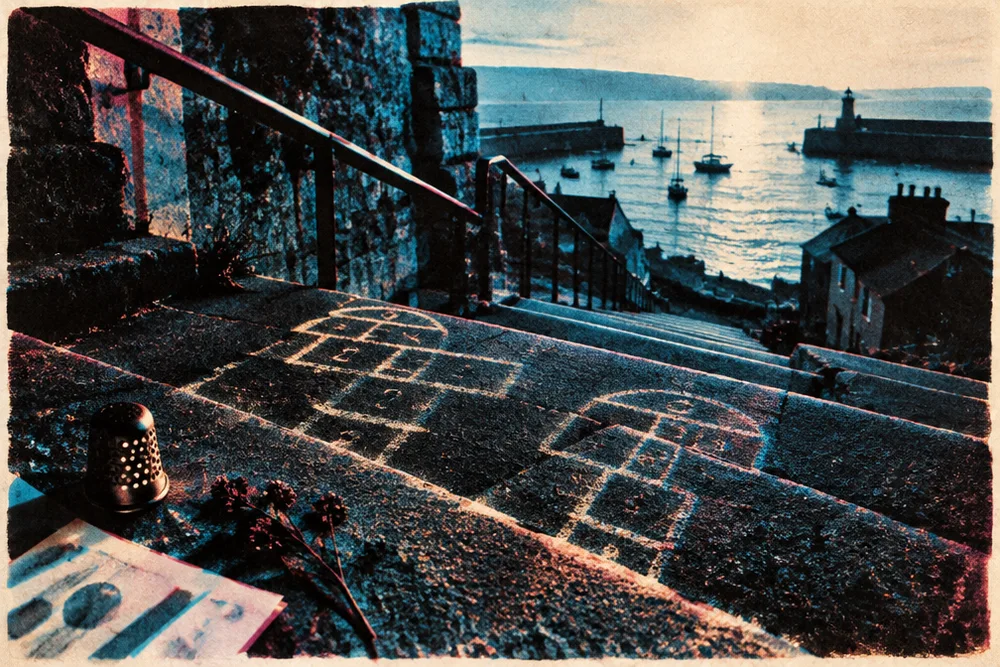
They descended. The bakery’s back vent breathed warm yeast into the cold. At the first turn, a child had chalked a hopscotch grid across three steps. Iven stepped around it with careful dignity, and Mara followed, lifting one foot over a crooked square marked with a sun.
At the lower end stood a hand-painted sign: PUBLIC PASSAGE. The letters had faded, but the screw holes were newer than the board. Mara photographed the sign, its placement, the route’s connection to the street, then noted the doorways it served.
The fifth stair began only a short distance away. From its upper entrance the two routes appeared almost parallel, divided by a wedge of houses and a retaining wall. Mara had crossed the area on the way to work, but never walked both lines in sequence. The plan in the title file showed their boundaries as separate strips. The council’s sale map shaded them both the same red.
“This is the one they say we can lose?” she asked.
“They say we can lose all of them.”
“I mean the fifth.”
“The one nobody uses.” Iven said it without sarcasm, which made it harder to dismiss. “I’ve taken it once. It goes down and comes out by the old net sheds. The other one comes out there too.”
“There are houses between them.”
“Not at the bottom.” He tipped his chin toward the descent. “You’ll see.”
The steps were less worn than the fourth, but still sound. A line of moss marked the edge where rainwater ran. Mara counted landings and recorded the width. There were no doors opening onto it, no side paths, no street connection that the adjacent descent lacked. The upper entrance began on a public lane; the lower one reached the same paved apron as the fourth stair, within a few yards of its exit.
She took a photograph from the landing, framing both entrances below.
“There’s your difference,” Iven said. “This one is useful on the map.”
At the bottom, Mara set the map against the retaining wall and marked the fifth stair’s exit. From there, she could see the fourth stair’s mouth around a low corner. Between the two lay the back of the net sheds, boarded and unoccupied, their doors chained shut. No house depended on the fifth for a way out. No shop used it for deliveries. The other route, slightly longer by a dozen steps, served the same paved apron and offered a handrail on both sides.