The Weight of One Thimble
Page 104 of 184
Chapters
“Yes.”
“And the ticket?”
Mara took out the inventory image from the chest inspection. The pawn ticket was small, its number partly rubbed away. The inspection image showed the torn edge where it had been detached from a larger sheet. Sella set beside it a ticket stub kept with the ledger. The two edges did not match perfectly at first; one had curled under from years of handling.
Mara adjusted the angle of the lamp. The torn fibers met. The missing wedge on the ticket corresponded to a raised tuft on the stub. She stopped before touching either. “That’s the join,” she said. “But I won’t claim it’s conclusive from this view. We need the high-resolution image and your account of where the stub has been kept.”
“It’s been with the book since my grandmother gave it to me.”
“That belongs in your statement. So does the fact that you retained custody.”
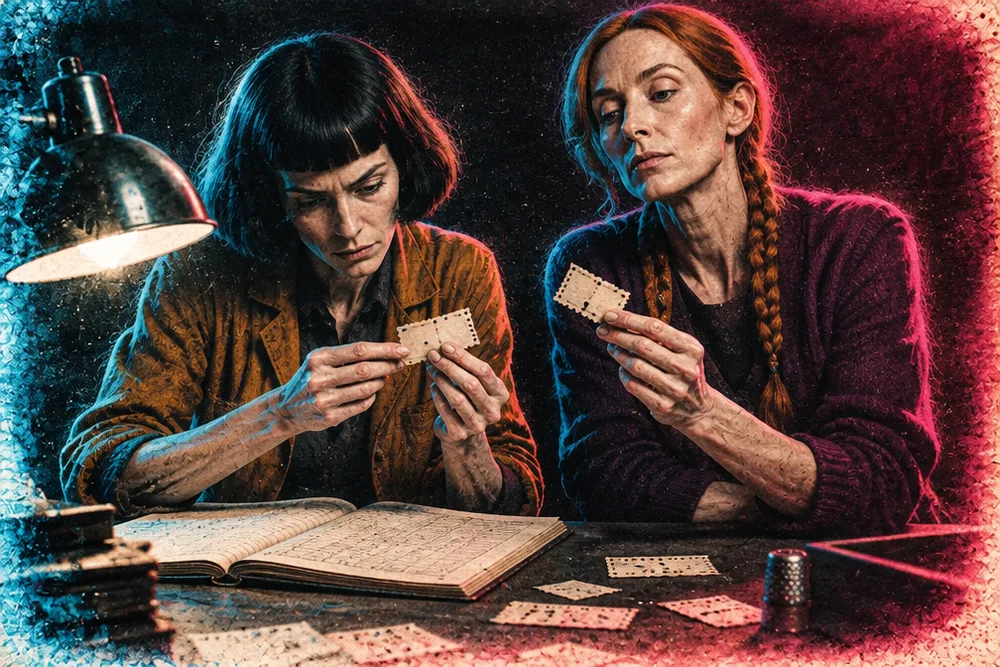
Sella’s fingers rested on the page edges. She had not agreed to surrender the ledger. She had agreed to let the record become public. That difference mattered, and Mara would have to preserve it as carefully as the paper.
They worked through the next hour without trying to solve the family lines. Mara checked leaf numbers and stitching; Sella read the entries aloud while Neri’s blank forms served as a checklist. The payments appeared in five clusters, one for each strip. Some households had paid pennies. Others had brought stone, timber, or a day’s labor, its value entered in the same narrow column as coin.
The language changed in the extension. A different hand had added a heading: On Stopping the Passage. Under it, the account reserved a share of net sale proceeds for the contributors’ households if public passage ceased. It named no individual heir. Instead it directed that the original entries be used to trace the claims.
“This is why you wouldn’t let me separate the pages,” Mara said.
“This is why I wouldn’t let you call it a memorial.” Sella ran a finger over the cover, not the ink. “My family didn’t keep it safe for a nice story about a seamstress giving up her thimble. We kept it because the town took the ground, then acted like the stairs had appeared through generosity.”
Mara’s gaze returned to the five columns. The truth made no clean division between one side and another. Public passage had been purchased by households and offered to everyone; the proceeds clause had not made the stairways private, but it had kept the contributors’ stake alive. The same account supported access and restitution. Removing either part would distort the transaction.