The Weight of One Thimble
Page 101 of 184
Chapters
Her phone vibrated in her coat pocket. Iven’s message was brief: Still at the ferry rail. Wind is worse. Don’t wait up. He had sent it before she withdrew the extract. She pictured him at the landing, navy duffel beside his shoe, refusing a lift because the stairs were quicker. The third stair turned toward the water in a tight bend where the railing was low. He took it slowly but used it every day.
Mara typed, You should have waited. Deleted it. Then: I’m working. The record is worse than I hoped. She sent that, though it explained nothing.
In the lobby, the public-sale notice stood beneath a sheet of scratched plexiglass. The map showed all five stairways shaded in the same pale color, their entrances marked for proposed gates. A line at the bottom listed the buyer’s purchase price and the council’s projected use of the proceeds: ferry operations, landing repairs, and debt service. It was the same page Tobin had shown her when he explained that losing the sale could mean cuts to harbor services. The sale was not a villain’s scheme. It was a solution chosen because the town had run short of money.
But the notice named no other interest. Mara had thought she could force the council to consider access, then later make room for the ledger’s claims. The draft finding made clear how easily later became never. When officials read a summary before a source, the summary could harden into fact.
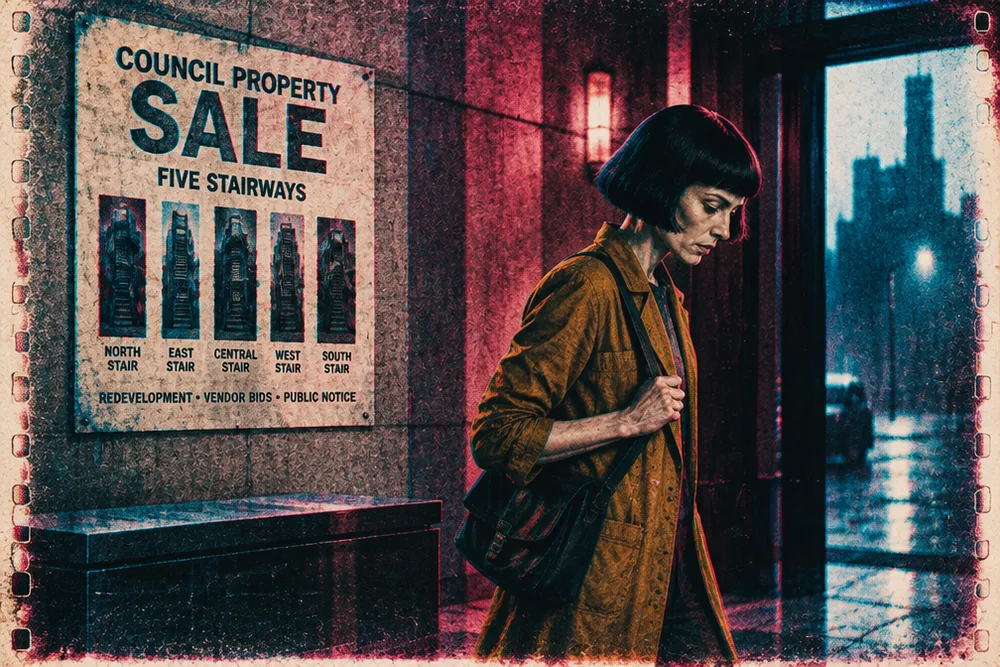
Outside, a shutter banged in the wind. The shopkeepers were already preparing for tomorrow’s procession, fastening signs over their doors and laying out the ropes that would keep the route clear. At noon, every shop would close. The twelve judges would carry the iron chest downhill while the bells sounded. The vote would follow at the tidehouse, where the chest would be opened and its supposed charter displayed.
Mara had spent the night before inspecting that chest and finding only a thimble and a pawn ticket. The thimble had sent her to Sella. Sella’s ledger had sent her back to the town’s stairways, not as a story of generous judges but as a record of people who had bought passage together. The ceremonial object had looked empty because the town had emptied the ceremony of its origin.
She turned from the display notice and walked down toward the pawnshop. At this hour Sella would have locked the front door, but the upstairs room kept a lamp lit over the accounts. Mara carried no official seal and no guarantee that the full ledger would save anything. She had a withdrawn extract, a stamped form, and less than two hours before the shops shut for the ritual.