The Weight of One Pebble
Page 176 of 261
Chapters
A knot in the stone made her stop before SECOND. She tapped gently around it, testing the surface. The sound changed once, a duller note. She shifted the letter’s edge a fraction to keep the cut out of the weakness, then checked the pattern and adjusted the next space to match. The word would still read cleanly from a distance.
A boat lantern moved beyond the yard, briefly whitening the damp stones. Ottilie looked up until it slid past. She imagined the committee’s eyes on this face in the morning: Murrish’s small blue ones; the others’ measuring looks; Denzil’s heavy lids, lifting when he saw something he could not file away as a private correction.
She went back to the chisel. The letters did not grow kinder because the men might dislike them. She finished SECOND, then FARE. The line stopped short of the stone’s right edge, with a margin broad enough to show that it had been placed there on purpose.
The words ONE PENNY remained on the pattern in their own measured row. Ottilie set each letter with the same care she had given the name. She did not cut a currency mark to save room. There was no reason to make a passenger puzzle over a sign when the words could be read plainly.
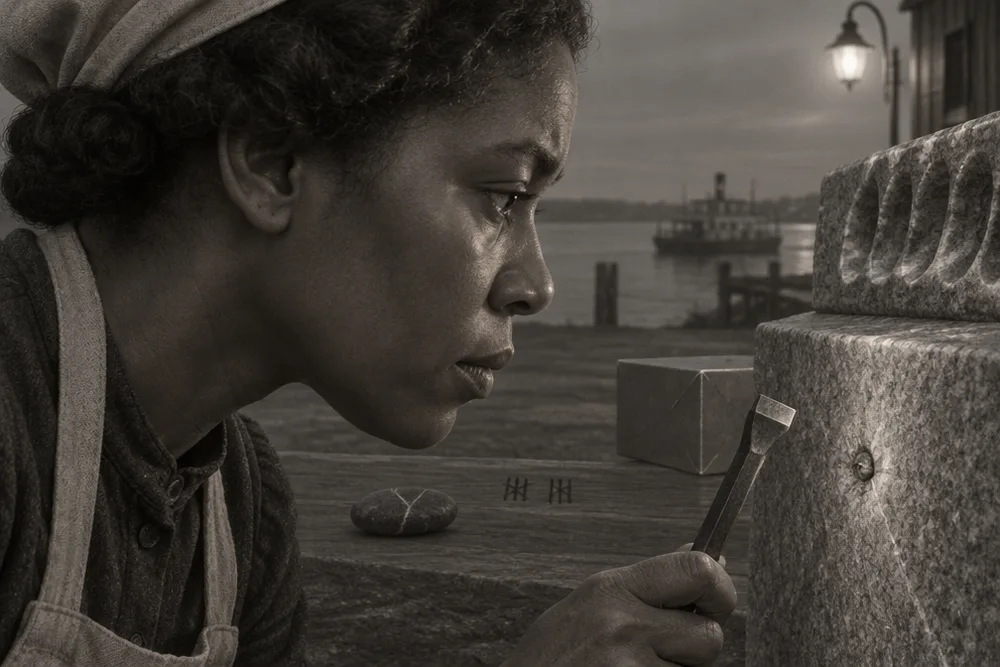
She was working in the space between ferry calls. When the crew’s voices came up from the landing, she put down her hammer. A burden was being brought off the floating stage, the men shifting their grips to keep it clear of the wet edge. Their words carried into the yard in short commands, not a ceremony but the ordinary business of putting weight down safely.
Ottilie watched from the gate until the load was settled. She knew that kind of weight, the way a thing could tilt against a hand that did not expect it. Her own stone was fixed, but the letters were still new enough to be damaged by a careless strike. She closed the gate partway to keep the yard clear and returned to the face.
REMAINED was the longest word. She had allowed for it in her pattern, but the stone demanded a slower hand than the paper. She cut the straight strokes first, then opened the rounded letters. The middle of the word came out narrower than she liked. She stopped before carrying the compression any farther, widened the next space, and took the word to its end without forcing a letter into its neighbour.