The Weight of One Pebble
Page 130 of 261
Chapters
“There,” said the woman.
“If the water lets us stand there,” he said.
“Then say that too.”
Bess squatted to gather the line. “We won’t be telling the borough where to stand a man before we know what water we have. But we can tell them when we’ll be done with the stone. No call for a speech while there’s a hand underneath.”
The man at the post asked what would happen if the reader came to the watergate with the wrong paper. Bess wound the line over the crook of her elbow. She said she would rather know what the borough agreed to before she began to reckon how it might break its word. He accepted that far enough to come away from the post, though he did not come much nearer.
Ottilie could hear the oar on the far side knocking once in its rest. There was time yet before the boat came back. Nobody had asked her what size the letters would be or where she meant to begin cutting them. She found she could bear the omission. When the reading came to the tally, if it ever did, the people on the stair could hear of it without first having to hear of her.
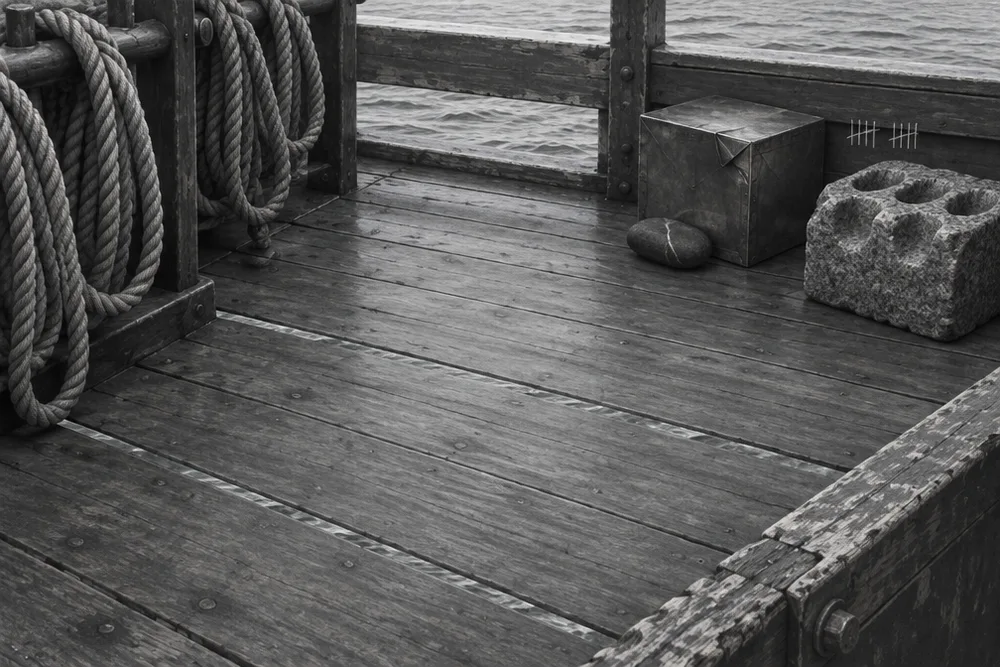
Bess hung the line on its peg and tested it with a tug. “Now,” she said, turning back to the crew. “If I’m to take words up the street for you, let’s have the ones you mean me to use.”
They spoke of having the inventory read aloud, including the entry naming the box, the pebble, and the tally’s provenance. They spoke of the danger of making the demand sound like an accusation against every alderman present. They spoke of whether the reading would delay the tide or leave the stage tied up too long. No one suggested that the crew could make the borough accept Ottilie’s lettering. No one offered to pay her completion money.
“The reading is something we can ask,” Bess said at last. “The council can refuse. If they do, we decide again whether we carry. We don’t promise the block our hands today.”
“That leaves the burden on you,” Ottilie said.
“The burden was on us already,” said the woman by the ropes. “At least this is a burden we can name.”
Bess asked for a vote to make the offer, not a vote on the procession itself. She repeated the wording slowly. The crew would keep ordinary crossings running. The crew would consider ceremonial assistance only if the borough agreed to read the public inventory at the watergate when the granite block was seated. The offer would not require the council to accept the disputed inscription, and it would not bind the crew to assist if the tide or safety conditions made the work wrong.