The Weight of Low Water
Page 184 of 240
Chapters
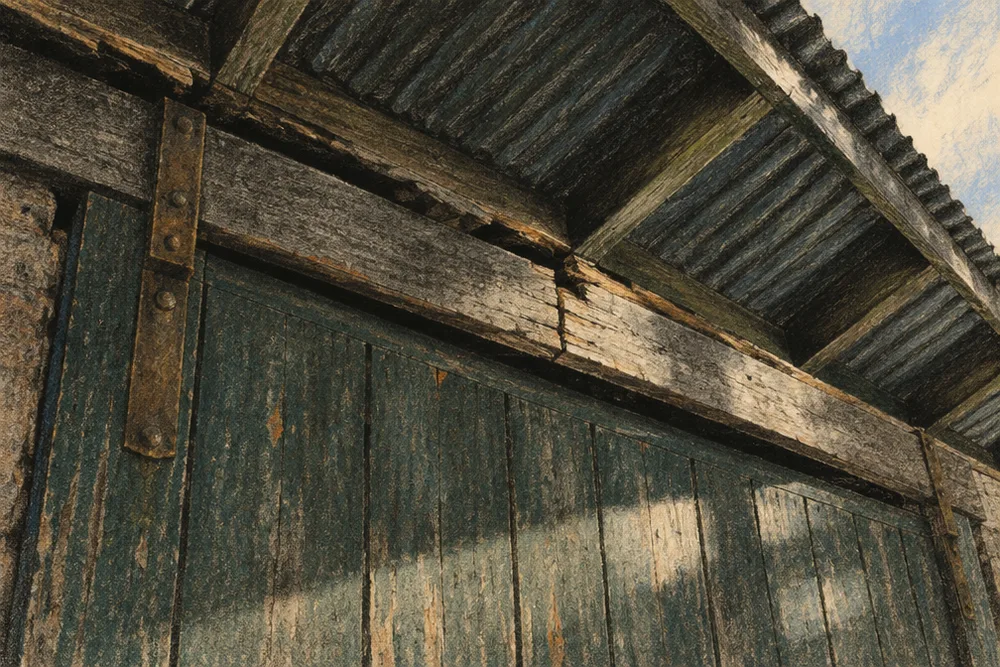
“If the roof work waits another winter, this gets worse,” the surveyor said. “The loading doors, too. The buyer could take the building as-is, but the price will reflect the risk.”
“And if we keep the weighing service?” Una asked.
“Then somebody pays for the roof and pays for the staff. There isn’t a version where the service is free just because people need it.”
Una looked toward the harbor. Beyond the shed, crews were hauling tubs from a small boat, their voices broken by gulls and the rattle of a trolley. She had spent the past months learning that facts could be used to make a clean account, but a clean account did not make the costs disappear.
She wrote the surveyor’s estimate beside the operating figures she had already collected. The total would not be covered by the crews’ receipt fees. There was no clever arrangement that made the arithmetic kinder.
“Put it in the particulars,” she said. “Every repair, every deferred one.”
Bess was waiting by the office when Una returned. Her plum cardigan showed beneath the canvas apron, and three nested brass weights rested against her hip. She had been sorting docket stubs into bundles by date, though the sale inventory called them routine papers.
“How bad?” she asked.
“Bad enough that I can’t promise the crews the shed and pretend the roof will be somebody else’s problem.”
Bess’s broad stance narrowed by no more than an inch. “They asked you to price equipment. Not to keep the building.”
“Nell’s trying to find a place for independent receipts. The fees cover the shifts and paper, not repairs like these.”
“Then it’s not a service plan. It’s a wish.” Bess set the weights down carefully. “A wish doesn’t keep a roof over a scale.”
Una looked at the old beam, at the brass pan polished by generations of hands. “I know.”
Bess studied her face, hooded eyes steady. “Do you? Because I’ve heard people call it a public service when they mean one woman should stay late without pay.”
Una had come prepared to ask Bess to stay on as caretaker after the sale, at least until a new arrangement could be made. She had rehearsed the words as practical ones: a few hours, just keeping an eye on things, until the crews were settled.
Now the phrase sounded like a way of hiding a bill.
“I was going to ask if you’d take a caretaker arrangement,” she said. “Unpaid, while we sort out the rest.”