The Umbrella in the Wrong Locker
Page 206 of 209
Chapters
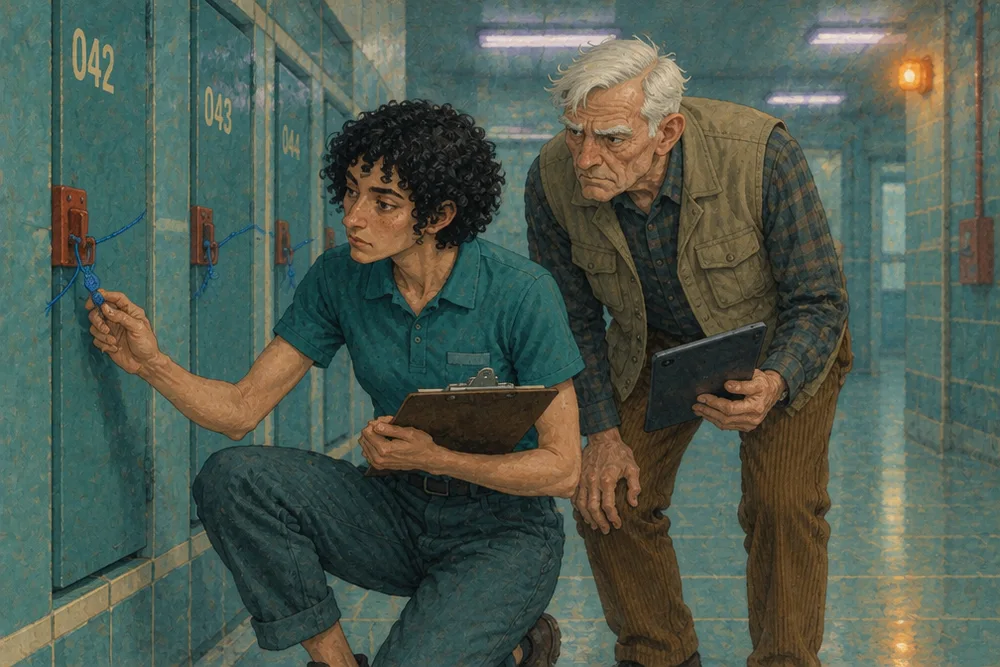
At the replacement for locker 14, Vian checked the seal without opening the door. The adhesive edge held firm. They read the number aloud: six-one-eight-four. The second attendant, Hal, matched it against the sheet and initialed the witness box. The entry read: seal intact; latch not tested; door not opened. Time: 12:06.
At the next locker, the routine differed. The seal was not there to preserve a closed door; it covered the hasp after a maintenance inspection. Vian checked the latch with a gloved hand, keeping the door shut, and wrote that the latch resisted once before settling. Hal signed beside the note. It would be reported to maintenance before the next shift.
The sequence took longer than the old round. That was deliberate. Their fingers found the roughness of a sticker edge, the cold raised lip of a lock, the small giving motion of a catch. None of those sensations was a substitute for a written entry, but they could keep a person from mistaking a mark on a page for a door moving on its hinges.
The old caretaker’s bench was gone from the lower annex. The shallow compartment behind locker 41 had been documented and emptied under the city’s supervision. Ida’s signed complaints were now in the municipal archive, cross-referenced to the intake number on her cover sheet. Her statement remained under the lease inquiry classification, but the index had been corrected to connect it to the pool safety complaint and the missing-person chronology.
Vian had seen the corrected index that morning. It showed both paths: the file’s original placement and the later link, with dates and authorizations. The city had not rewritten the past so it could look competent. It had written down where it had failed to join the facts.
Ida had asked not to have her current address attached to the record. That request was honored. Her testimony was preserved, with confidential contact details separated and access controlled. She had not come back to Lowbank. No one had put a return date on a form. The pool’s reopening did not depend on a woman who had already spent years teaching elsewhere coming back to prove what she had said.
The first shift moved forward in ordinary pieces. A child misplaced a towel. Someone asked whether the shallow end was warm enough for a toddler. The lifeguard radio crackled once and was answered without alarm. Vian found a lost key beneath the bench and logged its return. Each small task belonged to the same building that had once held the sealed locker, the paired records, the letters no one had been able to find by searching the right words.