The Umbrella in the Wrong Locker
Page 137 of 209
Chapters
“I’m filing a correction to a witness statement for the Lowbank lease review.” Nell placed the folder on the counter but kept one hand on it. “The original must stay in the record.”
The clerk examined the form’s heading. “You’ve marked it as an attachment to the prior statement.”
“Yes.”
“And you understand it may be included in the public hearing packet?”
“I do.”
Miri stood beside her, shoulders squared. She had insisted on coming but had not touched the folder. Nell had expected to feel exposed at the counter. Instead, she was conscious of the clerk’s practical questions: date, file number, how many pages, whether the original bore an exhibit stamp. The statement was being handled, not judged. That would come later.
“Does the correction include confidential material?” the clerk asked.
“No medical information. I’ve said there was an incident, but the details belong in the confidential exhibits.”
The clerk nodded and pointed to the copying station. “We’ll scan the correction with the original reference. Your original statement is already in the lease file, so this will cross-reference it rather than replace it.”
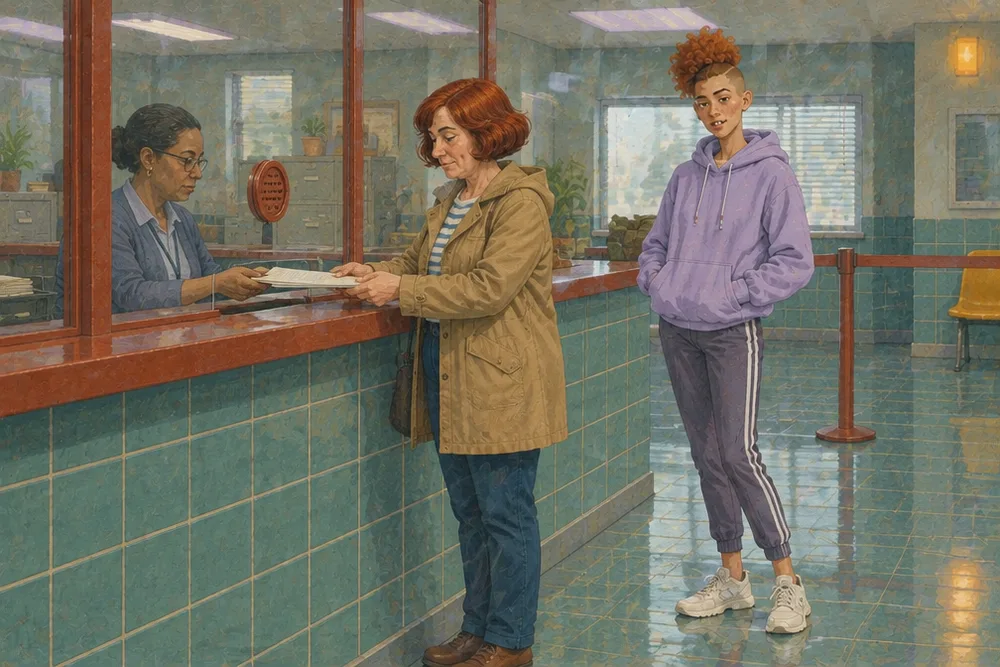
Nell unclipped the folder. She showed the correction and the waiver, then held the pages while the clerk counted them. The statement she had signed years earlier was not in her hands; it was already somewhere in the club’s records, secure from her now. The knowledge made the correction feel less like a clean beginning than a mark added to a map after people had already followed the wrong road.
“I’d like a receipt that shows the correction is attached,” she said.
“We can give you an intake receipt today. The attachment number will be assigned when the file clerk processes it.”
“Please make that clear on the receipt.”
The clerk slid a white sheet across the counter. Nell filled in her name and the date. At the line marked relationship to original witness, she wrote: signer. Her hand hesitated before the final stroke, then pressed hard enough to emboss the sheet beneath.
Miri glanced at her writing. “You can use my full name on the public form?”
“Only where it’s already there. The correction doesn’t mention your medical details.”
“Okay.”
The clerk lifted the papers and placed them in a gray tray. Nell watched the folder leave her hands. Nothing dramatic happened. No alarm sounded; no one hurried to stop them. The pages simply entered the ordinary machinery of the city, a place where records might be misplaced or misunderstood, but also where a correction could be attached without destroying what it corrected.