The Tide Between Our Lines
Page 5 of 216
Chapters
“Put it against the paper delivery, if that’s easier,” Xanthe said. It was the sort of thing she always said when someone reached for money in front of her.
Mera kept counting. “I’ve paid for the paper. You brought it this morning.”
Xanthe had meant something else, though she wasn’t sure what. That it was embarrassing to be paid for an hour by a woman who knew how many hours she was short. That Mera might make the coins mean more than they did. But Mera counted out exactly what she had written on the slip and waited for Xanthe to count it too.
She did. Then she put it in her pocket. It would pay for supper and leave enough for breakfast. She had been so busy counting toward the shop that she had lately got into the habit of calling amounts like that nothing.
Mera lifted the spoiled sheets. “I’ll put these upstairs. Good enough for packing, if nobody reads them.”
“Turn them in,” Xanthe said. “Or he’ll get his own address back round a parcel.”
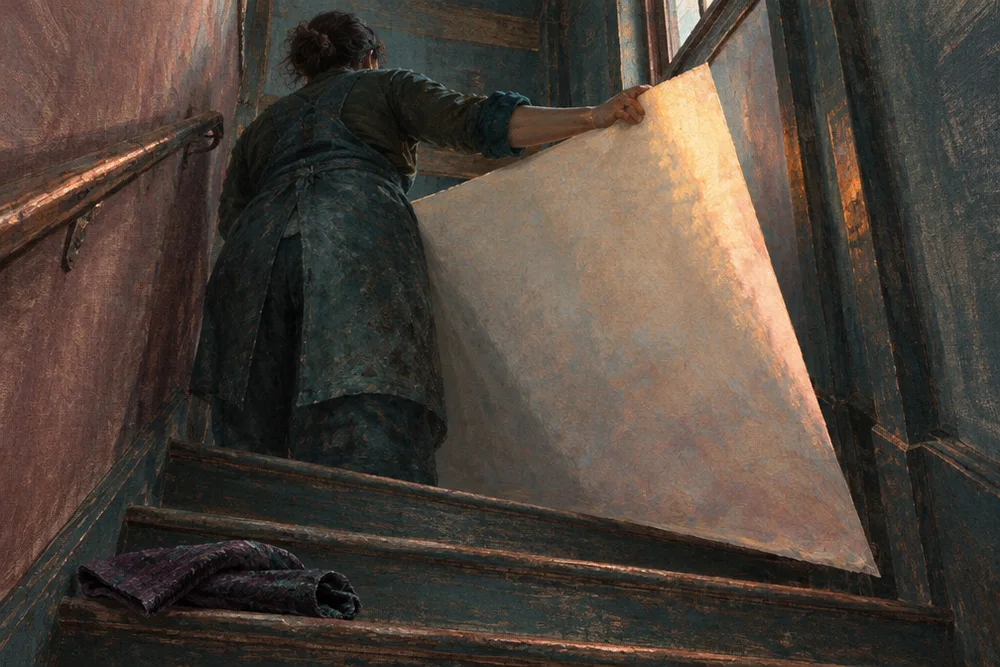
Mera paused at the foot of the loft stairs to reverse the top sheet. Xanthe took the ink off the form and wiped the bed down. The line she had changed came clean last; she had used a touch too much ink on the first pull. She folded the rag to find a dry corner and brought it with her to the counter.
Orla Senn arrived near noon with her navy cape damp at the hem and a wax pencil tucked behind one ear. She walked elbows out, careful not to brush the shelves, and laid a rolled chart on the counter. Mera came down from the loft while Xanthe wiped ink from her fingers with a rag.
“The board needs a survey edition of the harbor footpaths,” Orla said. Her small mouth made the word survey sound like an obligation she had already explained twice. “The old notices are contradictory. Some routes disappear under ordinary tides; others are unsafe even when they look dry.”
“And you want a map?” Xanthe asked.
“A practical one. Printed clearly. A limited run for the landings and the Weighhouse. I can pay an advance from the access budget.” Orla unrolled the chart. Pencil lines crowded the coast: landings, steps, private boundaries, a thread of path along Rivet Walk. “We need a version workers can carry and visitors can read.”
Xanthe’s first glance went to the work, not the money. The route lines were thick in places where the stones were narrow, and the names sat over one another near the ferry turn. The harbor did not hold still long enough for those clean, confident marks.