The Tide Between Our Lines
Page 34 of 216
Chapters
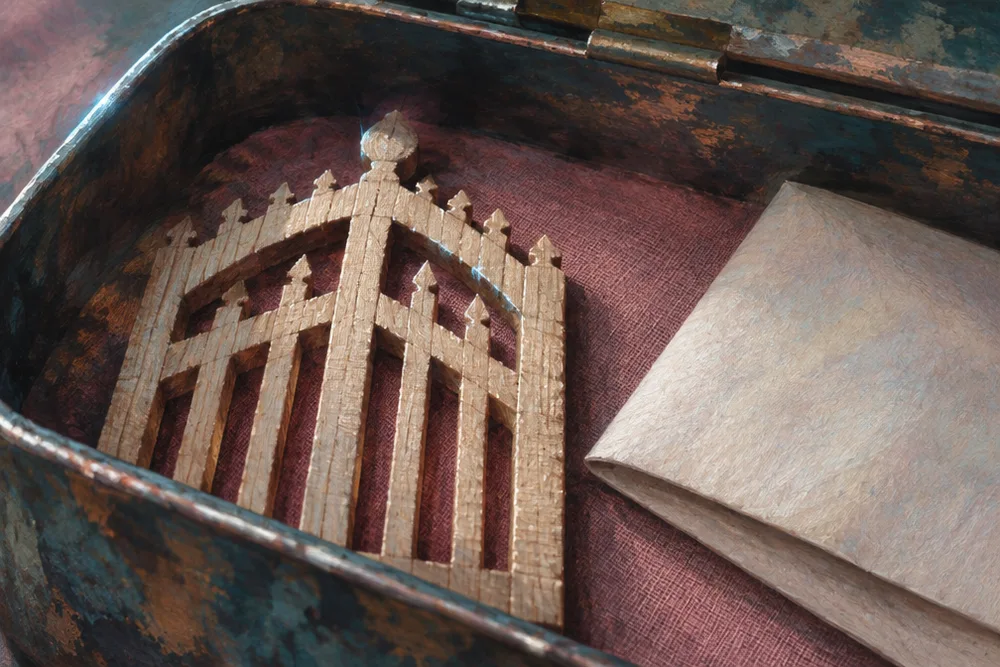
He could have written the whole thing in words. Xanthe would have understood. But their notes had grown into a way of thinking together, even when she was not there to answer. Small marks forced him to decide what mattered. The shape did not tell her who owned the gate, or what sort of key it took, or whether the passenger had eventually reached her sister’s house. Those were facts that needed a sentence. The block could only say: the line continues, and the way is blocked.
Gethin took a pencil from the pocket of his dull teal coat and wrote on the folded note beneath it. “Net shed gate locked tonight. Passenger needed the other side; upper landing adds a long walk. Logged the detour.” He looked at the words and added, “I don’t know whether the gate is normally open.”
The note was a report, not an apology. He liked that better. Apologies could be accepted without changing anything. A record could be pointed to later.
He tucked the note under the block and closed the lid. The tin clicked shut. For a moment he kept his hand on it, listening to the harbor beyond the shelter. Wind worried the rigging on the moored boats. Somewhere farther out, the last ferry horn sounded, low and brief.
He walked back to the quay and checked the tide board. The water was rising against the stone. At Half-Door Press, the approach over Rivet Walk would be covered soon, though the shop itself sat above the wash on its stone spur. He had never met Xanthe. He knew the shape of her hand in the small, precise cuts she made, and the way she drew a route without pretending its rough parts were smooth. He knew she was trying to buy the shop, and that a survey commission would not cover all of the deposit.
For a few minutes he stood looking toward the press’s dark windows. Then he turned toward home. The tin would keep the note dry until she came for it.
Xanthe came to the Salt Shelf the next morning after the water had fallen back from Rivet Walk. Gethin did not see her. He was already aboard the ferry, easing the boat away from its mooring as the first graders arrived with their baskets and thermoses. From the deck he could see the clock shelter and, for an instant, a plum work jacket at its wall. Then the boat turned toward the outer landing and the shelter vanished behind the quay.