The Tide Between Our Lines
Page 2 of 216
Chapters
“Knowing it is not the same as having it.” Mera did not soften the words, but neither did she sharpen them. She slipped one key off the ring, unlocked the drawer beneath the counter, and brought out the signed option. “I need the cash for a dry flat. My knees have had enough of climbing this spur, and I won’t finance a dream by staying in a damp room another year.”
Xanthe’s thumb had left a black crescent of ink on the paper wrapping. She rubbed at it and made it wider. “Could the deposit come out of the balance? Or be split over the first year?”
“No.” Mera folded the option at its crease. “I like you. That’s why I’m not going to promise something I can’t carry. I’ll sell the shop, not the money you don’t have.”
The question landed without drama. That made it harder to argue with. Xanthe had told herself that if she saved enough from jobs, took enough late commissions, and worked until her shoulders cramped, the shop would become inevitable. Mera’s refusal put a number and a date between the work and the door.
“I could take a loan,” Xanthe said.
“You could.” Mera pushed the option back into the drawer. “And then you’d own the press and owe the bank more than the press earns. You’re good at printing. Be good at arithmetic too.”
Outside, the water began to cover the lowest stones. Xanthe watched it through the open door. “If I don’t make the deposit?”
“Then the option ends. I’ll sell to whoever can pay.” Mera tapped the counter once with a key. “There’s another buyer asking questions, but I haven’t agreed to anything. I wanted you to have the first chance because you understand the shop.”
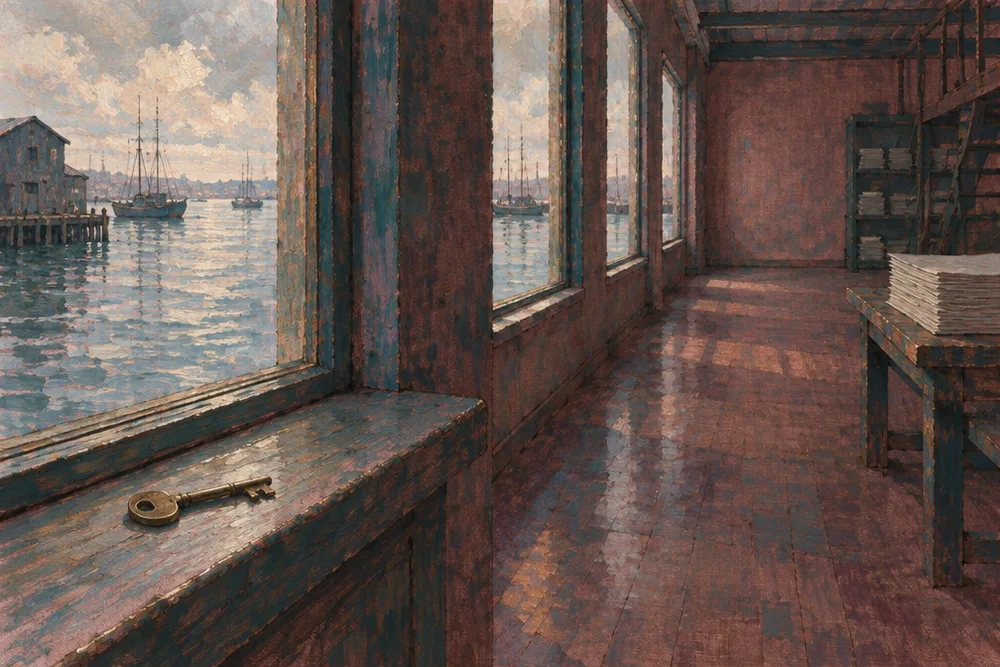
Xanthe took the ream toward the paper loft. She did not ask Mera to keep it for her. The loft was dry, even when the path vanished, and its narrow windows faced the harbor. She stacked the paper squarely, then stood with both hands on the top sheet until the trembling in her fingers stopped.
A printshop she could reach only by boat at high tide still felt like a place she could claim. She had spent years making other people’s words legible, choosing type, setting margins, checking that every line held. A door of her own would mean nobody could decide she had outstayed her welcome. But wanting the door did not supply the deposit.
From below came the sound of Mera pulling one sheet off the drying rack. Then came a small, distinct “Oh.”