The Tide Between Our Lines
Page 182 of 216
Chapters
She stopped at that last section. “You’re sure about the editorial independence?”
“I’m renting you a shop, not buying your opinions.” Mera tapped the paper. “If you print something that damages the building, that’s different. If you print something I dislike, I can dislike it in my own time.”
Xanthe tilted her head before she disagreed. “The clause says no structural alteration without written consent. I want to make sure blocks and fixtures don’t count as alterations.”
“They don’t. The press stays where it is. You can bring in your own type and blocks. If you want to bolt anything to the stone, ask me first.”
“That’s fair.”
They added a sentence confirming that the lease gave Xanthe no ownership interest and no claim to the eventual sale. The words looked blunt, but bluntness was useful. Xanthe had wanted a door nobody else could lock. A lease could not give her that. It could give her a door she could use, under terms she understood, while she built something that might pay for the next decision.
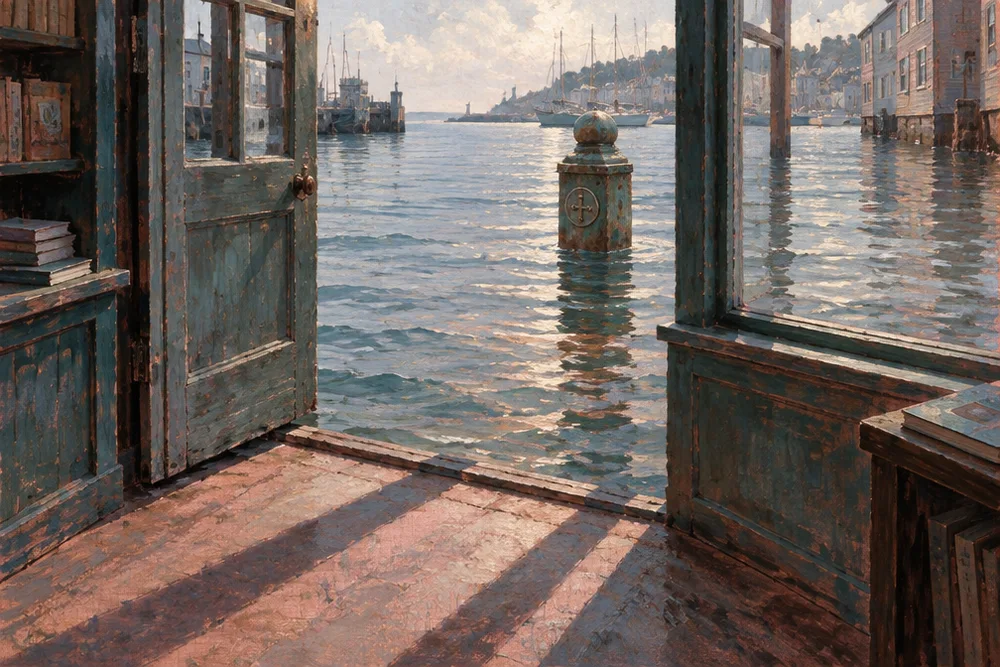
Mera called the inspector’s office to confirm the appointment. The visit was scheduled for the next morning, after the low-water window had opened the approach. She wrote the time in the margin of the lease, then circled it.
“The public repairs are on the board’s list,” Xanthe said. “But they’re only funding the public part. The private step is still ours to account for.”
“Mine,” Mera corrected. “If I’m leasing you the place, the threshold is my repair.”
“It’s still the way in.”
“And I’m still the owner.” Mera’s tone held no triumph, just the fact that a boundary did not vanish because both people wanted the same thing. “I’ll get a mason to look after the inspection. If it needs more than I can pay, we discuss what the lease can bear. But I won’t send you the bill for a stone I own.”
Xanthe looked at the window. The water had crept over the lowest rivet heads. Soon the walk would disappear, and the shop would be reachable only by boat. She had imagined the ring above the latch as a sign that the place was half waiting for her. Now she understood that it was also a reminder: the doorway belonged to a shore that changed, and its safe use depended on people agreeing where responsibility lay.